
Over fifty percent of American travelers still believe that booking early always guarantees the lowest prices. The rise of advanced booking engines has changed the way people plan trips, challenging traditional habits and assumptions. With real-time data and smarter algorithms, these platforms offer more than basic reservations—they shift how travelers discover deals, compare options, and secure savings. This guide helps American readers cut through myths, understand booking engine features, and uncover smarter travel strategies.
Table of Contents
- Booking Engines Defined And Common Myths
- Types Of Booking Engines For Travelers
- How Booking Engines Deliver Deep Discounts
- Critical Features For A Smooth Booking Experience
- Risks, Limitations, And How To Avoid Pitfalls
- Booking Engines Vs Direct Bookings: Key Differences
Key Takeaways
| Point | Details |
|---|---|
| Booking Engines Enhance Travel Planning | Booking engines provide real-time availability, transparent pricing, and personalized recommendations, streamlining the travel planning experience. |
| Flexibility Can Lead to Savings | Travelers should monitor pricing trends and remain flexible with booking times, as last-minute deals can sometimes offer unexpected savings. |
| Multiple Booking Types Offer Unique Benefits | Different booking engines cater to various traveler preferences, with options for comprehensive comparisons or direct supplier loyalty perks. |
| Security and Trust are Crucial | Travelers must verify booking platforms’ security and cancellation policies to protect against potential risks and enhance their booking experience. |
Booking Engines Defined and Common Myths
A booking engine represents a specialized digital platform that enables travelers to search, compare, and reserve travel services directly through an online interface. These sophisticated web applications transform how consumers plan and purchase travel experiences by providing real-time availability, transparent pricing, and instant confirmation capabilities.
Contrary to popular misconceptions, modern booking engines are far more than simple reservation tools. Sophisticated guest-facing applications have evolved to deliver seamless user experiences with advanced features like dynamic pricing, personalized recommendations, and secure payment gateways. They challenge traditional travel booking myths by offering intuitive interfaces that empower travelers to make informed decisions quickly and confidently.
One persistent myth suggests that early bookings always guarantee lower prices. However, research indicates this isn’t universally true. Price dynamics are complex, with late bookings sometimes presenting unexpected cost advantages. Travelers should remain flexible and monitor pricing trends rather than assuming a single booking strategy works universally. Booking engines now utilize complex algorithms that adjust prices based on demand, seasonality, and real-time market conditions.
Pro Tip: Price Monitoring Strategy: Set up price alerts on multiple booking engines and track fare fluctuations for at least two weeks before your intended travel date to maximize potential savings.
Types of Booking Engines for Travelers
Travel booking technology has evolved dramatically, presenting travelers with multiple booking engine types designed to streamline reservation processes. Comprehensive research categorizes these platforms into distinct segments that cater to different traveler preferences and needs, each offering unique advantages in the digital travel marketplace.
The primary categories of booking engines include Online Travel Agencies (OTAs), meta-search platforms, direct supplier websites, and specialized aggregators. OTAs like Expedia and Booking.com provide extensive inventory across multiple travel services, allowing users to compare prices and book accommodations, flights, and packages in one location. Meta-search engines such as Kayak and Skyscanner offer another approach, enabling travelers to simultaneously search multiple platforms and identify the most competitive pricing options.
Tourist preferences for booking modes vary significantly, with distinct traveler segments demonstrating unique selection criteria. Some travelers prioritize direct supplier websites for potential loyalty benefits, while others prefer the comprehensive comparison tools provided by meta-search platforms. Each booking engine type presents trade-offs between convenience, pricing transparency, and potential cost savings.
Here’s a summary of the main types of booking engines and who benefits most from each:
| Booking Engine Type | Core Benefit | Best For |
|---|---|---|
| Online Travel Agencies | Wide selection of services | Travelers wanting one-stop shop |
| Meta-Search Platforms | Price comparison across sites | Bargain seekers and frequent fliers |
| Direct Supplier Websites | Loyalty perks and direct deals | Brand-loyal and frequent guests |
| Specialized Aggregators | Niche or bundled offers | Travelers with specific needs |
Pro Tip: Platform Diversification Strategy: Use at least three different booking platforms when planning travel to maximize your chances of finding the most competitive prices and optimal travel arrangements.
How Booking Engines Deliver Deep Discounts
Booking engines have revolutionized travel pricing strategies by implementing sophisticated algorithms and dynamic pricing mechanisms that generate substantial savings for consumers. Research examining electronic booking adoption reveals how these platforms leverage advanced technologies to offer personalized promotions and unprecedented price reductions.

The core mechanisms behind deep discounts involve multiple strategic approaches. Advanced booking engines utilize real-time data analysis, monitoring factors like seasonal demand, inventory levels, and competitor pricing to dynamically adjust rates. They create complex pricing models that enable instant price optimization, allowing travelers to access significantly reduced travel costs that traditional booking methods cannot match. Some platforms employ machine learning algorithms that predict demand fluctuations and automatically adjust pricing, creating opportunities for budget-conscious travelers to secure exceptional deals.
Customer segmentation plays a critical role in discount delivery, with tourist preferences demonstrating diverse booking mode selections. Booking engines analyze individual user behavior, past purchase history, and browsing patterns to generate targeted promotions. These personalized discount strategies enable platforms to offer unique pricing that feels tailored to each traveler’s specific needs and preferences, making deep discounts feel more accessible and relevant.
Pro Tip: Discount Tracking Strategy: Set up price alert notifications across multiple booking platforms and track price variations for at least two weeks before your intended travel date to maximize potential savings and identify the most competitive rates.
Critical Features for a Smooth Booking Experience
A superior booking experience hinges on sophisticated technological features that transform complex travel planning into an intuitive, user-friendly process. Essential booking engine characteristics focus on creating seamless interactions through advanced interface design and intelligent functionality that anticipates traveler needs.
The most critical features include real-time availability tracking, transparent pricing displays, and secure payment processing. Modern booking engines integrate advanced algorithms that instantly update inventory across multiple platforms, eliminating frustrating scenarios of double-booked accommodations or unavailable services. Sophisticated filtering systems allow travelers to customize searches based on precise preferences, including budget constraints, amenity requirements, location specifics, and personal comfort standards. These intelligent systems leverage machine learning to provide increasingly personalized recommendations with each subsequent interaction.
Electronic booking adoption research demonstrates that user trust emerges from predictable, straightforward booking processes. Key trust-building features include comprehensive information displays, clear cancellation policies, instant confirmation notifications, and multiple payment method options. Mobile responsiveness has become particularly crucial, with travelers expecting seamless experiences across smartphones, tablets, and desktop platforms. Advanced booking engines now incorporate features like language translation, currency conversion, and integrated customer support to reduce friction and enhance global accessibility.
Pro Tip: Feature Verification Strategy: Before finalizing any booking, spend two minutes thoroughly reviewing the platform’s cancellation policy, payment security indicators, and customer support contact information to ensure a completely secure transaction.
Risks, Limitations, and How to Avoid Pitfalls
Booking engines, while transformative in travel planning, present several potential risks that travelers must navigate carefully. Common concerns surrounding booking platforms address critical user experience and security challenges that can compromise the overall travel booking process if not strategically managed.
The primary risks associated with online booking platforms include potential price manipulation, hidden fees, and data privacy vulnerabilities. Dynamic pricing algorithms can create unpredictable cost fluctuations, where prices change rapidly based on demand, browsing history, and complex machine learning models. Some platforms may employ psychological pricing strategies that create artificial scarcity, pressuring travelers into making immediate booking decisions. Additional risks involve incomplete service descriptions, limited cancellation flexibility, and potential discrepancies between advertised and actual accommodations or travel services.
Electronic booking research highlights the critical role of user trust in mitigating these potential pitfalls. Travelers can protect themselves by implementing strategic verification processes, including cross-referencing prices across multiple platforms, reading detailed user reviews, and carefully examining booking terms and conditions. Advanced travelers recommend utilizing screenshot documentation, saving confirmation emails, and maintaining comprehensive communication records with service providers to create accountability and reduce potential booking complications.
Pro Tip: Risk Mitigation Strategy: Always use a credit card for bookings to leverage additional consumer protection mechanisms, and never complete a transaction on a booking platform without first verifying the website’s security credentials and reading complete cancellation policies.
Booking Engines vs Direct Bookings: Key Differences
Understanding the nuanced landscape of travel reservations requires a comprehensive examination of booking methods and their inherent advantages and limitations. Strategic differences between booking engines and direct reservation systems reveal complex technological and consumer experience variations that significantly impact travelers’ booking decisions.
Booking engines differentiate themselves from direct bookings through advanced technological capabilities and comprehensive service offerings. Unlike traditional direct bookings, which limit travelers to single provider inventories, booking engines aggregate multiple options, enabling instant price comparisons, real-time availability tracking, and sophisticated filtering mechanisms. These platforms leverage machine learning algorithms to personalize recommendations, dynamically adjust pricing, and provide transparent information across numerous service providers. Direct bookings, while potentially offering loyalty program benefits, often lack the comprehensive search and comparison features that modern travelers demand.
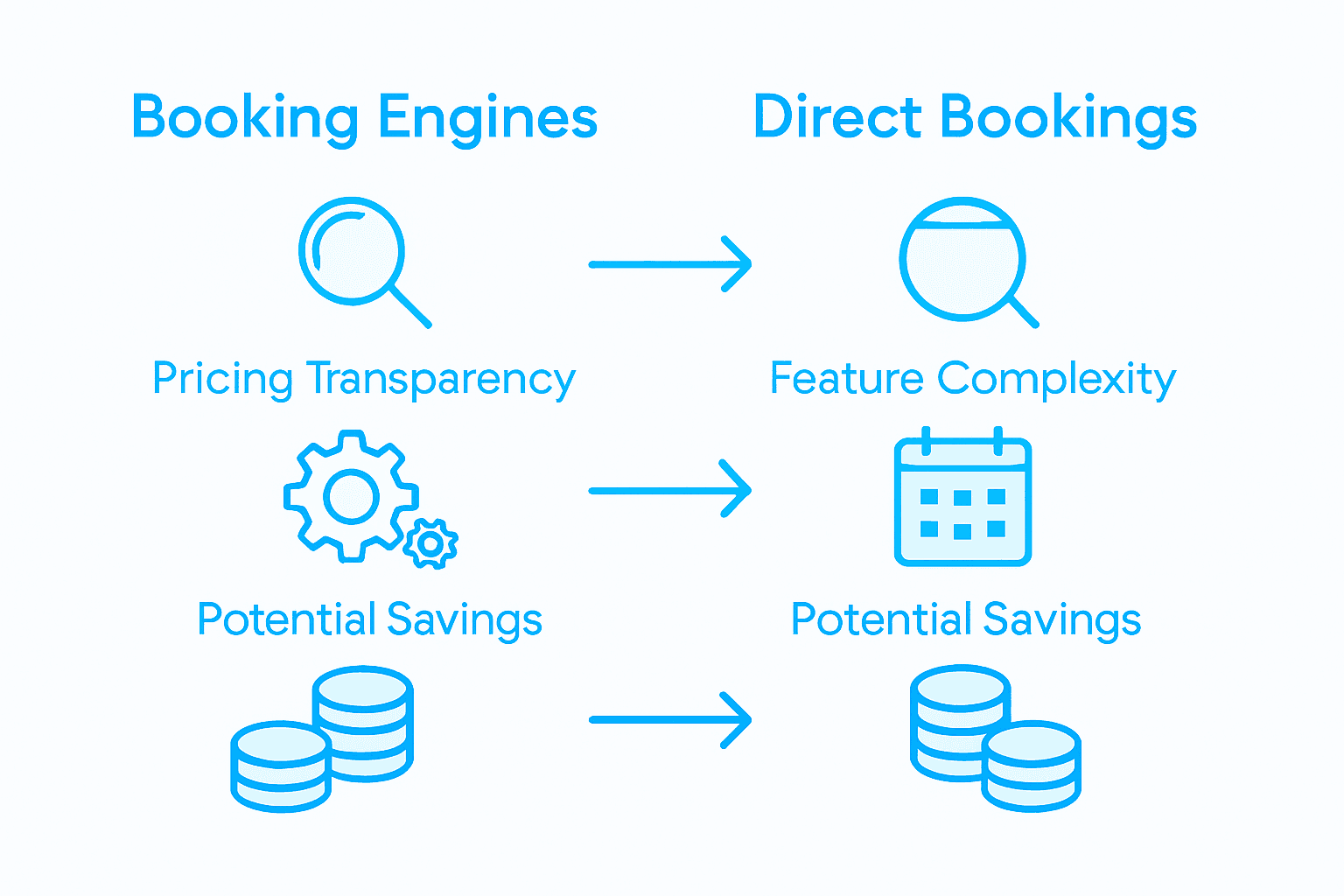
Tourist booking preferences demonstrate significant variability across different traveler segments. Some consumers prioritize direct booking relationships with specific brands, valuing personalized service and potential loyalty rewards. Others prefer the comprehensive overview and competitive pricing strategies offered by booking engines. These preferences are influenced by factors including age, travel frequency, technological comfort, and specific trip requirements. Advanced booking platforms now bridge these preferences by offering integrated loyalty tracking, price matching guarantees, and seamless communication channels with service providers.
Below is a comparison of booking engines versus direct bookings to help guide your decision:
| Aspect | Booking Engines | Direct Bookings |
|---|---|---|
| Inventory | Multiple providers | Single provider only |
| Price Transparency | Instant comparison tools | Limited to own offers |
| Personalization | Machine learning suggestions | Brand loyalty offers |
| Cancellation Flexibility | Varies by platform | Often more flexible |
Pro Tip: Comparative Booking Strategy: Always cross-reference prices between booking engines and direct provider websites, and maintain accounts on multiple platforms to maximize your potential for finding the most competitive travel arrangements.
Discover Affordable Travel Deals with Smart Booking Engines
Understanding how booking engines create affordable travel opportunities is just the first step toward smarter trip planning. If navigating dynamic pricing, comparing multiple platforms, and finding trustworthy discounts feels overwhelming, you are not alone. Many travelers struggle with price fluctuations and hidden fees but also want the convenience of personalized recommendations and seamless booking experiences. Booking engines offer these advantages but knowing how to leverage them effectively is key to unlocking great savings.
Explore how you can maximize your travel budget today by using cutting-edge booking engine technology combined with expert insights on Travel Tips. At PilotTravelDeals.com you can easily compare deals on flights, hotels, and more across multiple providers with just a few clicks. Start your journey toward stress-free, budget-friendly travel by visiting our Miscellaneous section for diverse strategies and stay informed with our Uncategorized travel articles. Take control of your next booking and enjoy discounts up to 80 percent by using robust comparison tools made for savvy travelers like you.
Frequently Asked Questions
What is a booking engine?
A booking engine is a specialized online platform that allows travelers to search, compare, and reserve travel services directly, providing features like real-time availability, transparent pricing, and instant confirmations.
How do booking engines help in finding affordable travel deals?
Booking engines utilize advanced algorithms and dynamic pricing mechanisms to monitor demand and adjust rates, often providing significant savings that traditional booking methods may not offer.
Can I trust the prices shown on booking engines?
Prices on booking engines can vary due to dynamic pricing strategies. To ensure you’re getting the best deal, it’s wise to cross-reference prices across multiple platforms and confirm pricing details with the provider.
What are the main types of booking engines?
The primary types of booking engines include Online Travel Agencies (OTAs), meta-search platforms, direct supplier websites, and specialized aggregators, each catering to different traveler needs with unique benefits.
Recommended
- Complete Guide to Why Book Travel Online – PilotTravelDeals.com
- Travel Meta-Search Explained: Find the Best Deals – PilotTravelDeals.com
- Understanding the Workflow for Booking Flights Clearly – PilotTravelDeals.com
- Why Use Fare Comparison for Affordable Travel – PilotTravelDeals.com
- 7 Smart Alternatives to Timeshare Ownership – Complete Transfers

