
TL;DR:
- Business travel expenses can be minimized with thorough planning, clear objectives, and strategic budgeting. Implementing disciplined systems for booking, compliance, and on-the-road choices ensures consistent cost savings and reduces administrative waste. Using centralized platforms and advance bookings enhances control, resulting in more affordable and efficient trips.
Business travel is one of the fastest ways to burn through a budget. Flights, hotels, meals, and ground transport add up quickly, and without a clear system in place, even a short two-day trip can cost two or three times what it should. The good news is that overspending on business travel is almost always a planning problem, not a pricing problem. This guide walks you through a step-by-step framework for setting objectives, building a realistic budget, booking strategically, and traveling smarter so every trip delivers measurable value without draining your company’s resources.
Table of Contents
- Define your business objectives and requirements
- Create an actionable budget for maximum control
- Book smart: Strategies for airfare and hotel savings
- Travel smarter: Tactics for on-the-road savings
- International business trips: Compliance and documentation essentials
- A fresh perspective: Systems beat shortcuts for affordable business travel
- Solutions for smarter, more affordable business travel
- Frequently asked questions
Key Takeaways
| Point | Details |
|---|---|
| Objective-first planning | Start each business trip plan by clarifying your goals and maximizing ROI with strategic activity grouping. |
| Budget by category | Divide expenses—flights, hotels, meals, transport—and use per diem benchmarks to avoid overspending. |
| Book well in advance | Advance bookings and centralized purchasing consistently secure lower rates for flights and hotels. |
| Smart traveler tactics | Flexible scheduling, light packing, and smart meal choices keep out-of-pocket spending to a minimum. |
| Compliance for international travel | Use structured checklists and policy reviews to avoid costly administrative or regulatory surprises abroad. |
Define your business objectives and requirements
First, clarify your trip’s purpose and requirements before mapping out logistics and budget.
The single biggest mistake business travelers make is booking first and justifying the trip later. Before you open a flight search or request a hotel quote, write down exactly what you need to accomplish. A signed contract, a key client relationship, a product demo, a site inspection. Be specific. Vague purposes produce vague results and unnecessary spending.
Once you have a core objective, apply what experienced travel managers call “objective stacking.” As outlined in these business trip planning tips, starting with a clear business objective and then grouping nearby activities into a single trip dramatically increases your return on investment. If you’re flying to Chicago for a client meeting, ask whether there are two or three other prospects, vendors, or internal teammates in the same city worth scheduling in the same trip. One flight, multiple wins.
Here’s a quick requirements overview table to complete before any booking begins:
| Requirement | Details to confirm |
|---|---|
| Core business objective | What must be achieved for the trip to succeed? |
| Secondary objectives | Additional meetings or tasks worth stacking |
| Trip duration | Minimum days needed to fulfill all objectives |
| Required documents | Passport, visa, business materials, insurance |
| Budget approval status | Confirmed spend authority before booking |
| Compliance requirements | Company travel policy, approvals, preferred vendors |
Pro Tip: If you can’t clearly articulate the business case for your trip in two sentences, the trip probably needs to be reconsidered or redesigned before any money is spent.
Refer to efficient trip planning best practices for additional frameworks on structuring your trip from the ground up before money changes hands.
Create an actionable budget for maximum control
With clear objectives in hand, it’s time to lay out a systemized budget to keep every aspect of your trip financially under control.
Budgeting for business travel fails when it’s treated as a rough estimate. Real control comes from breaking your total expected spend into specific categories and assigning realistic benchmarks to each one. According to the corporate travel budget guide from Brex, building an affordable trip budget means estimating cost per category, including flights, lodging, meals, and local transport, while planning for advance booking to control airfare costs before they spike.
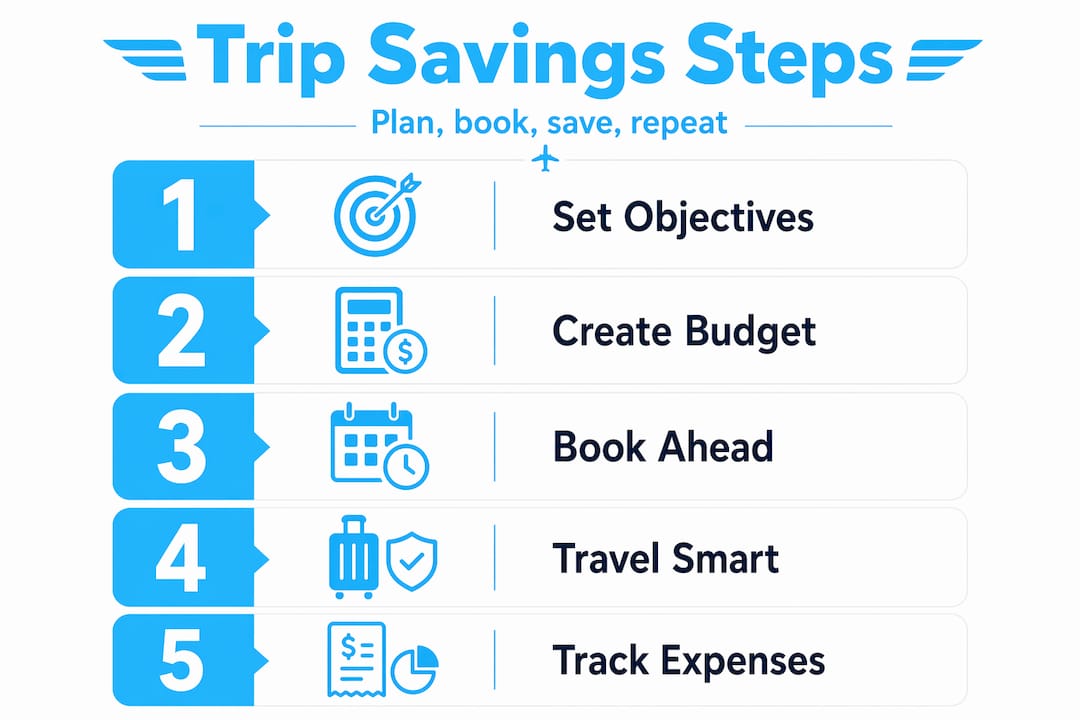
Here’s a practical comparison of budget categories and what to expect at different spend levels:
| Category | Budget option | Mid-range | Premium |
|---|---|---|---|
| Domestic airfare | $150 to $250 | $300 to $450 | $600 and above |
| Hotel (per night) | $90 to $130 | $150 to $220 | $300 and above |
| Daily meals | $40 to $60 | $70 to $90 | $100 and above |
| Ground transport | $20 to $40 | $50 to $80 | $100 and above |
Build your budget using these four steps:
- List every cost category relevant to the specific trip. Don’t leave out small items like parking, luggage fees, or SIM cards for international travel.
- Assign a per-day estimate to variable costs like meals, transport, and incidentals. Research current benchmarks for the destination city.
- Apply per diem allowances where possible. As noted in expense policy benchmarks for modern companies, using government or industry-aligned per diem rates for meals and incidentals simplifies reimbursement and makes costs predictable for both the traveler and the finance team.
- Add a 10 to 15 percent contingency buffer to your total for unexpected costs without blowing up the whole budget.
Advance planning is one of the most underused cost controls available. Booking flights and hotels weeks ahead typically delivers significantly lower rates than booking within a few days of departure. Check out the business travel budgeting process and smart travel budgeting tips for more detailed strategies on constructing your cost framework. If your trip involves international destinations, reviewing a Vietnam trip cost guide or similar destination-specific resources gives you realistic benchmarks before finalizing numbers.
Book smart: Strategies for airfare and hotel savings

Planning your budget leads naturally into booking decisions. Here’s how timing and process save you big money.
Booking at the right time is the most reliable lever for reducing airfare costs. The data is consistent: booking lead time benchmarks recommend at least 14 days before departure for domestic flights and closer to 21 days for international routes to avoid the steep price spikes that hit last-minute travelers. A ticket that costs $280 three weeks out can easily jump to $480 or more in the final 72 hours before departure.
Here are key booking strategies that consistently reduce costs:
- Use a single managed platform or travel management company (TMC). According to corporate trip management best practices, centralizing bookings through a managed travel program reduces cost variance by giving your company access to preferred vendor rates and making policy compliance automatic rather than optional.
- Leverage negotiated rates with preferred vendors. Airlines, hotel chains, and car rental companies all offer corporate rate programs. If your company travels regularly, these negotiated rates can outperform any consumer-facing deal you’d find through fragmented individual searching.
- Avoid splitting bookings across multiple personal accounts. When employees book through personal channels to collect loyalty points, they often miss the lowest negotiated corporate rates and create a compliance and reimbursement headache.
- Set booking windows as policy, not suggestions. When lead-time benchmarks are embedded in company policy rather than left to individual judgment, the savings happen consistently, not just when someone remembers to book early.
“The goal isn’t to find the cheapest option on any given day. The goal is to build a process that reliably finds competitive prices every time, across every trip.”
Pro Tip: Compare hotel lead time savings data before setting your internal booking deadlines. Hotels often reward 21-day advance bookings with rates 20 to 30 percent lower than walk-in or last-minute prices.
Learn more ways to maximize business travel benefits and keep an eye on business travel trends and efficiency to stay ahead of pricing shifts and booking platform changes that affect your costs.
Travel smarter: Tactics for on-the-road savings
Once your bookings are set, traveling with smart tactics can further stretch your budget and support company policy.
Even the best-planned trip can see budget creep once you’re on the road. The fix isn’t to be uncomfortable. It’s to make deliberate, low-effort choices that add up to real savings. According to proven ways to save on business travel, the most effective on-the-ground tactics include staying flexible with departure times, packing light, and substituting cheaper meals when client obligations don’t require otherwise.
Here’s a numbered list of actionable on-road savings moves:
- Fly at off-peak times. Early morning and midweek flights are almost always cheaper than Friday afternoon or Sunday evening departures. When your schedule allows flexibility, take it.
- Pack carry-on only. Checked baggage fees add $30 to $60 per leg, sometimes more on international routes. A well-organized carry-on eliminates this cost entirely and saves time at baggage claim.
- Choose hotels near your meetings. This sounds obvious, but it’s frequently overlooked. A hotel that costs $20 more per night might easily save you $40 to $60 in daily rideshare or taxi costs if it’s located close to your primary venue.
- Eat strategically. Airport food and hotel restaurants carry 40 to 60 percent markups over comparable food nearby. Use meal delivery apps or walk a couple of blocks for better-priced options when client meals aren’t on the agenda.
- Activate loyalty memberships before you travel. Hotel and airline loyalty programs are free to join and often provide room upgrades, priority boarding, free breakfast, and other perks that directly offset out-of-pocket costs.
Pro Tip: Review your cheap travel checklist steps before every departure to make sure you’re not leaving easy savings on the table through small oversights.
Reviewing corporate travel discount examples is also worth doing regularly, as many corporate programs offer discounts on ground transport, airport lounges, and equipment rental that most employees simply don’t know are available. For travelers who rely on laptops during trips, a resource like this MacBook setup guide for business travel can help optimize both productivity and equipment costs on the road.
International business trips: Compliance and documentation essentials
Domestic trips are covered. International travel adds complexity, requiring thorough compliance and documentation.
International business trips carry a layer of cost risk that has nothing to do with airfare. Missed visa requirements, inadequate insurance, or undocumented expenses can result in fines, denied entry, or a reimbursement nightmare back at the office. As Harvard Business Review’s international travel checklist for U.S. employers notes, a structured checklist approach helps prevent the kind of costly last-minute disruptions that derail both the trip and the budget.
Here are the essential documentation steps before any international trip:
- Confirm visa requirements at least four to six weeks before departure. Processing times vary widely by country and can delay or cancel trips entirely if left too late.
- Verify travel insurance coverage. Standard company health insurance often doesn’t cover international medical emergencies. Make sure your policy covers evacuation, cancellation, and health care abroad.
- Review local business regulations. Some countries have restrictions on specific business activities by visiting foreign nationals. Verify compliance before your client assumes you can simply show up and sign a contract.
- Prepare an expense documentation system in advance. Know which receipts you’ll need, what format your finance team requires, and whether the local currency requires conversion documentation for reimbursement.
Additional compliance checks to run through before departure:
- Passport validity: Many countries require at least six months of remaining validity beyond your travel dates.
- Health requirements: Vaccinations, health declarations, and entry forms vary by destination and change frequently.
- Emergency contacts and local embassy information: Keep a printed and digital copy accessible at all times.
- Company duty of care obligations: Review your company’s risk assessment requirements and make sure someone at home base has your full itinerary.
Review business travel safety tips to complement your compliance checklist and make sure duty of care obligations are fully met before departure.
A fresh perspective: Systems beat shortcuts for affordable business travel
After hands-on tactics, let’s look at why disciplined systems matter more than scattered shortcuts.
Here’s something that most business travel advice misses entirely. The travelers and companies that consistently spend less aren’t the ones hunting for flash sales or using three different apps to compare prices in real time. They’re the ones who built a system and stuck to it. As demonstrated in effective business trip planning frameworks, affordable planning is actually a repeatable system: define the business case, apply a budget per category, standardize booking lead times, and centralize purchasing where possible. Ad-hoc “cheapness” without guardrails tends to increase risk and create administrative rework that costs more than it saves.
Think about what ad-hoc saving actually looks like in practice. An employee books through a personal account to earn loyalty points. The rate isn’t the negotiated corporate rate. The receipt format doesn’t match the expense system. Finance rejects the reimbursement. The employee resubmits. The manager approves an exception. Three people spent 40 minutes correcting a $30 saving. That’s not savings. That’s waste with a receipt.
There’s also an important tension worth addressing around loyalty programs. According to 2025 corporate travel policy guidance, traveler loyalty can directly conflict with cost control when employees prioritize accumulating personal points over using preferred vendors. The fix isn’t banning loyalty programs. It’s building policy clarity on when employees should use preferred vendor agreements versus redeeming loyalty perks, so both goals can coexist without creating noncompliant spend.
A system-based approach also makes training and onboarding easier. When new employees join, they follow the same booking workflow, expense process, and vendor list as everyone else. There’s no tribal knowledge about who has a discount code or which hotel chain the CFO prefers. Explore company travel savings strategies to see how structured policies translate directly into predictable, scalable cost reduction across your entire organization.
Solutions for smarter, more affordable business travel
Ready to put these strategies into action? Finding the right tools and booking resources makes a real difference in how consistently you can apply these frameworks.
At PilotTravelDeals.com, we aggregate deals across flights, hotels, ground transport, SIM cards, and more, giving business travelers one place to compare offers and capture savings of up to 80% on travel costs. Whether you’re booking a domestic trip with a 14-day lead time or preparing for a complex international itinerary, our comparison tools are built to surface the best available rates quickly. Start with our business trip planning best practices resource to build your system, then use our booking platform to put every strategy in this guide to work on your next trip.
Frequently asked questions
What is the best way to budget for a business trip?
Break costs into categories including airfare, lodging, meals, and transport, then apply per diem benchmarks to simplify predictions and avoid surprise expenses. The corporate travel budget guide recommends advance booking as a core cost control strategy.
How much lead time should I book flights for best prices?
Book at least 14 days before departure for domestic trips and 21 days for international to avoid expensive last-minute fares. Expense policy benchmarks consistently support this lead time as the threshold where prices begin to climb sharply.
Are meal allowances effective for controlling trip expenses?
Yes, using government or industry-set per diem meal rates helps predict costs and simplifies reimbursement for both the traveler and the finance team. Standardized meal reimbursement rates reduce disputes and speed up the approval process.
How can I minimize out-of-pocket costs during my trip?
Be flexible with flight times, pack carry-on only, select affordable nearby meals, and activate hotel memberships before you travel to unlock perks and upgrades. Practical savings tactics like these require no extra budget but consistently reduce total trip spend.
Why is centralizing travel bookings important?
Centralized booking gives organizations access to negotiated vendor rates and ensures policy compliance, reducing both cost variance and administrative complexity. As corporate trip management research shows, managed travel programs deliver more consistent savings than fragmented individual booking approaches.
Recommended
- 7 Smart Ways to Maximize Business Travel Benefits – PilotTravelDeals.com
- How to Plan Affordable Trips: Smart Strategies for Any Traveler – PilotTravelDeals.com
- How to get business class for cheap: proven 2026 strategies – PilotTravelDeals.com
- 8 Smart Ways to Travel for Cheap and Save Big Money – PilotTravelDeals.com

