

TL;DR:
- Booking sites enable quick price comparison, often leading to lower travel costs through competition.
- Stacking deals, rewards, and cashback maximizes savings on flights, hotels, and rentals.
- Comparing OTA prices with direct bookings can unlock perks and better flexibility, especially for loyal travelers.
You’ve found what looks like a great flight deal, but then a nagging voice asks: is this actually the best price, or is the booking site taking a cut? That anxiety is real, and it stops many travelers from confidently pulling the trigger. Here’s the truth: booking platforms aren’t always the enemy of savings. When used strategically, they can be your single most powerful tool for cutting travel costs, comparing options in seconds, and layering rewards that make every trip feel like a win. This guide breaks down exactly how to use booking sites to your advantage, without the guesswork.
Table of Contents
- How booking sites make price comparison easy
- Unlocking exclusive deals, rewards, and cashback
- Bundling and last-minute savings: Where OTAs really shine
- Tradeoffs: Perks and flexibility, booking sites vs. booking direct
- A smarter way to maximize savings: Our expert perspective
- Get the most from your bookings with PilotTravelDeals
- Frequently asked questions
Key Takeaways
| Point | Details |
|---|---|
| Easy price comparison | Booking sites let you quickly compare rates across dozens of providers for the best deals. |
| Stackable rewards and deals | Many travel platforms offer extra rewards and member-only discounts that boost overall savings. |
| Advanced savings strategies | Bundling, last-minute, and opaque bookings can unlock even greater travel discounts for flexible travelers. |
| Know the tradeoffs | Booking direct often offers more perks and flexibility; use both methods to maximize value. |
| Apply the double-check method | Cross-check deals between booking sites and providers for the absolute best combination of price and perks. |
How booking sites make price comparison easy
Booking sites, officially called online travel agencies or OTAs, do one thing exceptionally well: they pull live pricing from dozens of airlines, hotels, and car rental companies all at once. Instead of opening 12 browser tabs and manually checking each provider, you see everything side by side in seconds. That alone saves real time. But the bigger win is financial.
When providers compete for your booking in the same space, prices tend to drop. As NerdWallet explains, booking sites enable price comparison across providers, often leading to lower prices due to that competition. Hidden fees that hotels or airlines might bury in fine print also tend to surface earlier on OTAs, because the platforms are incentivized to show total costs upfront.
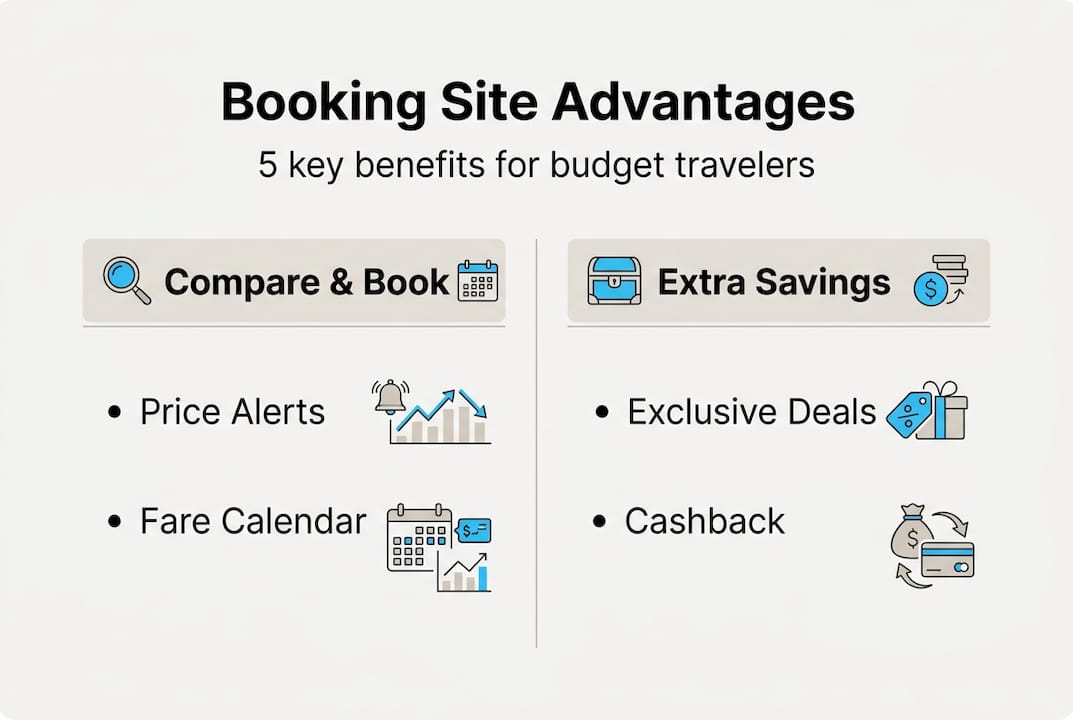
Features like price alerts and fare calendars take this even further. A fare calendar shows you the cheapest days to fly within a given month, which can mean the difference between a $180 ticket and a $420 one on the same route. Price alerts notify you the moment a tracked route drops, so you book at the right moment rather than guessing.
Understanding why compare hotel prices matters is the first step to making smarter decisions every time you travel.
Here’s a quick look at how the top OTAs stack up on comparison features:
| Platform | Price alerts | Fare calendar | Bundle options | Fee transparency |
|---|---|---|---|---|
| Expedia | Yes | Yes | Yes | High |
| Booking.com | Yes | No | Limited | High |
| Kayak | Yes | Yes | Yes | Medium |
| Priceline | Yes | Yes | Yes (opaque) | Medium |
Key benefits of using OTAs for price comparison:
- Side-by-side pricing across multiple providers in one search
- Price alerts that notify you when fares drop on saved routes
- Fare calendars that reveal the cheapest travel dates at a glance
- Fee visibility that surfaces charges before checkout
- Filter tools to sort by price, rating, amenities, or flexibility
Think of OTAs as your personal travel market, open 24/7 and always scanning for the lowest price so you don’t have to.
Unlocking exclusive deals, rewards, and cashback
Comparing prices is only the start. Let’s get into what really boosts your travel budget: stacking deals and rewards.

Many OTAs run exclusive promotions you simply won’t find by going directly to a hotel or airline site. Flash sales, member-only rates, and coupon codes for newsletter subscribers are common. Expedia One Key, Hotels.com Rewards, and similar programs let you earn points on every booking that can be redeemed for future stays or flights.
The real power move is stacking. Booking through a cashback portal like Rakuten or TopCashback before landing on the OTA can add 3 to 8 percent back on top of whatever deal you already found. According to booking platform research, booking sites allow earning extra rewards via shopping portals and cashback, stacking with direct loyalty programs for even more value.
Here’s a practical example of how stacking can work:
| Strategy | Estimated savings on $500 hotel |
|---|---|
| OTA member discount (10%) | $50 |
| Cashback portal (5%) | $25 |
| Credit card travel rewards (3x points) | ~$15 in points |
| Promo code from email list | $20 |
| Total stacked savings | ~$110 |
How to combine loyalty status with booking site deals:
- Join the OTA’s free rewards program before searching.
- Sign up for email alerts to receive promo codes.
- Activate a cashback portal like Rakuten before clicking through.
- Pay with a travel rewards credit card to earn points on the transaction.
- Check if your airline or hotel loyalty account still credits points for that booking.
For more tactics, browse these smart ways to save on hotels and dig into essential hotel booking tips that frequent travelers rely on.
Pro Tip: Always cross-check the final OTA price directly on the hotel or airline website before paying. Sometimes direct rates match OTA pricing, and you can add perks like free breakfast or room upgrades that no platform can offer.
Bundling and last-minute savings: Where OTAs really shine
With deals and rewards in play, let’s see how advanced strategies like bundling and opaque bookings help push savings even further.
Opaque bookings are a powerful but underused strategy. When you book “opaquely,” the platform hides the specific hotel brand or exact flight time until after you pay. In exchange, you get a steep discount. Sites like Hotwire and Priceline use this model, and the payoff is real: opaque bookings on platforms like Hotwire and Priceline can save 20 to 40 percent, though you sacrifice brand or location control.
Bundling is the other heavy hitter. Booking your flight, hotel, and rental car together through a single OTA often unlocks package discounts that aren’t available when booking each piece separately. The platform absorbs some margin to keep you on their site, and you pocket the difference.
Last-minute deals work best when your schedule is flexible. Hotels with unsold inventory will slash prices in the final 24 to 72 hours, sometimes by 30 percent or more. Apps like HotelTonight specialize in exactly this.
“Travelers who stay flexible on timing and brand can consistently save 25 to 40 percent using opaque and last-minute deals compared to standard advance booking rates.” — Booking data analysis
When to use opaque and last-minute deals:
- Opaque bookings: Best when you know the area well and don’t care about the specific hotel brand
- Last-minute hotel deals: Ideal for spontaneous weekend trips or when plans change unexpectedly
- Bundle bookings: Most valuable for trips of four or more nights where every component is needed
- Avoid opaque bookings when: Location is critical, you have specific accessibility needs, or you need guaranteed brand loyalty credit
For a deeper look at squeezing the most out of your accommodation budget, these hotel booking hacks are worth bookmarking.
Pro Tip: Consider bundling only when your schedule is flexible. A rigid travel itinerary and opaque bookings are a risky mix. Flexibility is the currency that makes these deals pay off.
Tradeoffs: Perks and flexibility, booking sites vs. booking direct
But are there times when booking sites aren’t the best choice? Let’s compare OTAs to direct booking so you can always make the smartest move.
Booking directly with a hotel or airline has genuine advantages that OTAs can’t replicate. Hotels frequently offer free upgrades, complimentary breakfast, or flexible cancellation only to guests who book on their own website. Airlines protect your seat assignment and rebooking priority more reliably when you’re a direct customer.
As NerdWallet research shows, direct booking is often better for loyalty points, elite perks, and flexible changes, while OTAs may forfeit these benefits. That tradeoff matters more the higher your loyalty status.
| Feature | Booking sites (OTAs) | Booking direct |
|---|---|---|
| Price | Often lower | Sometimes matched |
| Loyalty points | Partial or none | Full credit |
| Flexibility and changes | Limited | Better |
| Customer support | Third-party buffer | Direct access |
| Exclusive perks (upgrades, etc.) | Rare | Common for members |
| Access to exclusive deals | High | Limited |
Decision checklist: OTA vs. direct booking:
- Choose OTA when: Price is the top priority, you’re not loyal to a specific brand, or you’re comparing across multiple cities
- Choose direct when: You hold elite status, need flexible cancellation, or want property-specific perks
- Always check both before committing, because the gap between OTA and direct prices is shrinking
For travelers who want the full picture before they book, these hotel booking tips for 2025 and this step-by-step hotel booking guide offer solid frameworks.
The smartest approach pairs both. Use OTAs to discover the going market rate, then check direct to see if the hotel will match or add value. Neither side always wins.
A smarter way to maximize savings: Our expert perspective
Most travel guides stop at “use OTAs for price, book direct for perks.” That’s a starting point, not a strategy. What budget travel actually teaches you over time is that the biggest wins come from a consistent double-check habit, not a single booking channel.
Here’s how it works in practice: use OTAs to identify the best available rate and understand what the market looks like. Then call or email the hotel directly. This is where most guides go quiet. Hotels have more flexibility than their websites suggest, and a two-minute call can result in a rate match plus a free upgrade or late checkout. That’s value no platform captures.
For flights, set OTA price alerts six to eight weeks before your target departure. When the alert fires, check the airline direct before paying. Sometimes the airline offers the same fare with better rebooking terms, which matters a lot if your plans might change.
“The traveler who checks one place and stops there is leaving money on the table every single trip.” — Experienced budget traveler
Pairing OTA alerts with a budget travel hacks mindset gives you both the discovery power of platforms and the relationship benefits of going direct. It takes five extra minutes and often saves you significantly more.
Pro Tip: Don’t be afraid to call hotels after finding a deal on an OTA. Ask if they’ll match the rate and add a small perk. More often than not, they say yes.
Get the most from your bookings with PilotTravelDeals
Ready to put these strategies into action? The right tools make it easy to maximize every dollar you spend on travel.
At PilotTravelDeals.com, we’ve built the comparison experience around exactly what budget travelers need: fast, clear, and honest deal aggregation across flights, hotels, and more. Start by learning how to use travel comparison sites effectively so every search works harder for you. Then follow our cheap flights step-by-step guide to lock in the best airfare before prices climb. When you’re ready to sort accommodation, browse our curated hotel deals to compare top options with savings up to 80 percent. Everything is in one place, so you spend less time searching and more time actually traveling.
Frequently asked questions
Can booking sites really save money compared to booking direct?
Yes, booking sites often help travelers find lower prices due to fierce competition and exclusive online deals. The price comparison across multiple providers creates natural downward pressure on rates.
Do I still earn loyalty points when I book through an OTA?
Sometimes, but many hotel chains limit or exclude points and perks for OTA bookings, so check your provider’s specific policy before completing a reservation. Direct booking usually offers full loyalty credit.
What is an opaque booking?
Opaque bookings hide details like hotel brand or flight time until after payment, but they can save 20 to 40 percent off regular rates, making them ideal for flexible travelers.
Should I use price alerts from booking platforms?
Absolutely. Price alerts let you track specific routes or properties and book the moment rates dip, which is one of the most reliable ways to catch lower fares without constant manual searching.
Is customer service better when booking direct?
Generally yes. Direct bookings give you a faster path to resolution with the hotel or airline, especially for cancellations or last-minute changes. OTA support adds a third-party layer that can slow things down when timing matters.
Recommended
- 7 Essential Hotel Booking Tips 2025 for Smart Travelers – PilotTravelDeals.com
- How to choose the best travel sites for budget deals – PilotTravelDeals.com
- 7 Smart Examples of Travel Booking Hacks You Need – PilotTravelDeals.com
- 7 Proven Budget Travel Tips 2025 for Smart Savings – PilotTravelDeals.com
- Top 5 whichbudget.com alternativer 2026


