
TL;DR:
- Strategic timing and site selection can reduce last-minute travel costs by over 13%, especially with layovers.
- Using real-time, transparent, and mobile-friendly platforms, travelers should verify prices directly on airline or hotel websites before booking.
Last-minute travel has a reputation for being a budget breaker, but that’s far from the full story. Airfare savings patterns show that strategic timing can cut costs by 13% or more, and choosing layovers over nonstop flights can shave off as much as 22%. The real secret isn’t luck. It’s knowing which sites to use, when to use them, and how to layer your search strategy. This guide walks you through the best platforms for spontaneous trips, compares their strengths, and gives you practical moves to stretch every dollar further.
Table of Contents
- What makes a site best for last-minute deals?
- Comparing top last-minute deal platforms: who does it best?
- Bundling vs. booking separately: which strategy wins?
- Avoiding common pitfalls and maximizing your savings
- What most guides miss about last-minute deals
- Start your savings journey with PilotTravelDeals.com
- Frequently asked questions
Key Takeaways
| Point | Details |
|---|---|
| Platform selection matters | Choosing the right site can mean major savings on flights and hotels for last-minute travel. |
| Compare bundles vs. separate bookings | Packages offer convenience but individual booking can be cheaper—always compare both. |
| Leverage flight search tools | Sites like Google Flights can save up to 22 percent by using trends and layovers. |
| Look for hidden fees | Always check if comparison platforms miss baggage or seating costs—verify with airline/hotel direct. |
| PilotTravelDeals.com empowers travelers | The platform curates hotel and flight deals plus expert comparison guides for optimal last-minute value. |
What makes a site best for last-minute deals?
Not every travel site is built for the spontaneous traveler. Some platforms shine when you’re booking months ahead, locking in early-bird rates and planning complex itineraries. But for last-minute trips, the rules change fast. You need real-time inventory, transparent pricing, and flexible search tools that let you pivot quickly.
Here’s what separates a genuinely useful last-minute deal site from one that just looks good on the surface:
- Real-time availability: The site must update inventory constantly. A deal that’s listed but already sold out wastes your time.
- Price transparency: You should see the total cost upfront, including taxes and fees, before you click through to book.
- Flexibility filters: Filters for flexible dates, nearby airports, or “anywhere” destinations are game-changers for spontaneous travel. Understanding last-minute deals explained can help you recognize which platforms are built with these tools in mind.
- Mobile-first experience: Last-minute bookings often happen on a phone. A clunky mobile interface can cost you a deal while you fumble with the checkout screen.
- Speed: Sites that load fast and have streamlined checkout flows matter more when you’re racing to grab a limited-time price.
One important thing to understand is the difference between aggregator sites and direct booking. Aggregators pull listings from airlines and hotels into one searchable view, which is incredibly useful for comparison. But planning a last-minute trip effectively sometimes means going directly to the airline or hotel after you’ve identified the best price on an aggregator.
Why? Because comparison sites don’t always vet quality and may not reflect what you’ll actually pay once you add baggage fees, seat selection, or other extras. The listed price can look great, but the final checkout price tells a different story. Use aggregators to discover deals, then verify the price at the source before committing.
| Feature | Aggregator sites | Direct booking |
|---|---|---|
| Price comparison | Excellent | Limited to one supplier |
| Real-time accuracy | Varies by platform | Most accurate |
| Hidden fee risk | Higher | Lower |
| Flexibility tools | Often robust | Depends on airline/hotel |
| Booking speed | Fast (one platform) | Slightly slower |
Pro Tip: Before you finalize any booking on a comparison site, open a new tab and check the airline or hotel’s own website. If the prices are within a few dollars, book direct. You’ll have better customer support if anything goes wrong.
You can also explore top hotel booking platforms to see which aggregators consistently deliver accurate pricing for accommodations specifically.
Comparing top last-minute deal platforms: who does it best?
With the essential criteria clear, let’s see how the top deal platforms stack up for last-minute travelers. Not all of them are equally strong across flights and hotels, so knowing where each one excels saves you from wasted searches.
Google Flights is arguably the most powerful flight search tool available to spontaneous travelers. Its price calendar lets you see fare fluctuations across an entire month at a glance. The “Explore” feature lets you search by budget rather than destination, which is perfect when you’re flexible. And the historical trend analysis it uses to identify when prices bottom out is genuinely useful. Google Flights’ historical analysis helps users spot cheaper timing patterns, with travelers saving as much as 13% by choosing the right booking weekday and up to 22% by opting for a layover instead of nonstop routes.
Expedia blends flight and hotel searching with package bundling options. It’s solid for one-stop shopping, though it’s not always the cheapest source for individual components. Its loyalty rewards program can add value over time if you book frequently.
HotelTonight is built specifically for same-day and last-minute hotel bookings. It negotiates directly with hotels for unsold rooms, which often translates into genuinely discounted rates rather than just regular prices re-listed on a new platform. If you’re looking for a hotel within 24 to 48 hours of check-in, HotelTonight is worth checking first.
Hotels.com offers a rewards night for every ten nights booked, which adds cumulative value. Rates on Hotels.com are often competitive, and the platform covers a huge range of property types globally. A Hotels.com review notes that the breadth of inventory and user-friendly interface make it a reliable first stop for accommodation searches. For more booking strategies, check last-minute booking tips to understand how timing your search on each platform can shift results dramatically.
| Platform | Best for | Standout feature | Weakness |
|---|---|---|---|
| Google Flights | Cheap flights | Price calendar + trend data | No hotel or package deals |
| Expedia | Packages | Bundle discounts | Not always cheapest solo |
| HotelTonight | Same-day hotels | Negotiated unsold room rates | Limited to accommodations |
| Hotels.com | Reward seekers | Free night after 10 bookings | Prices vary vs. direct |
Here’s a simple numbered process to follow when using these platforms together:
- Start with Google Flights to identify the cheapest flight options and timing.
- Lock in your travel dates based on the lowest airfare window.
- Search HotelTonight or Hotels.com with those exact dates for accommodation.
- Compare the combined cost against an Expedia bundle for your specific trip.
- Book whichever combination comes out cheaper, verifying each price at the source.
When your travel dates are truly flexible, tools like finding random cheap flights can open up surprising destinations at prices you wouldn’t have thought to search for.
Bundling vs. booking separately: which strategy wins?
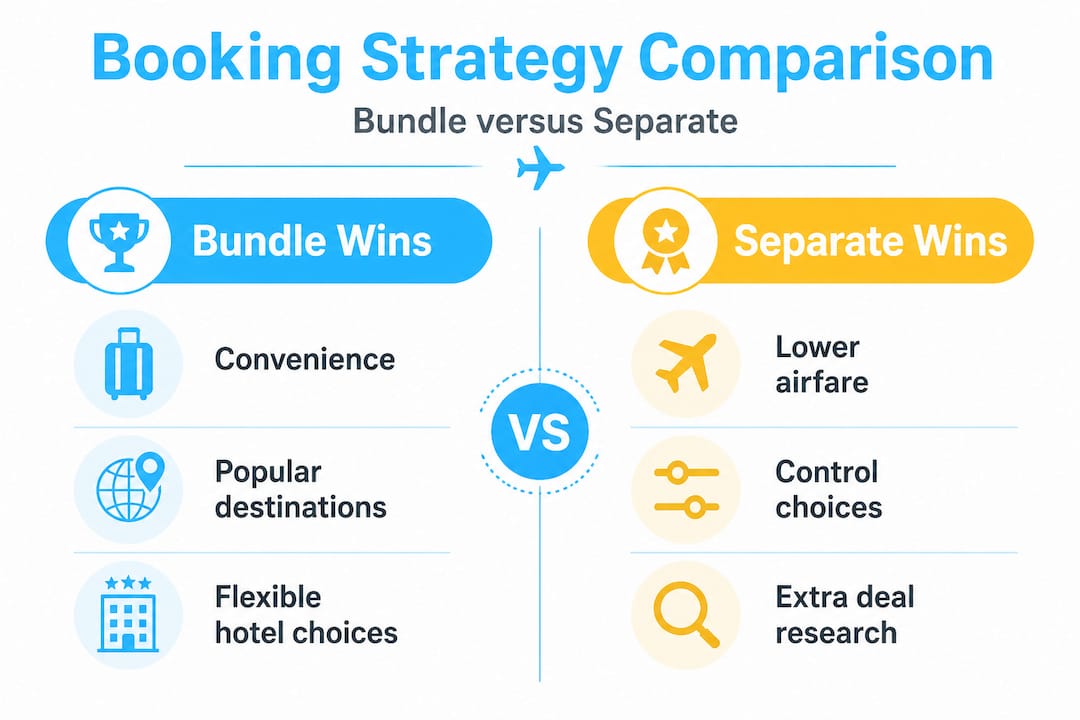
Once you’ve compared site platforms, the next question is whether bundling or booking separately delivers better last-minute value. The answer is genuinely situational, and getting it right can save you anywhere from $30 to several hundred dollars on a single trip.
Bundled packages combine your flight and hotel (and sometimes a rental car) into one purchase. The upside is convenience and sometimes a meaningful discount, because the platform is essentially selling you unsold inventory in bulk. The downside is that the discount on one component may be offset by a weaker deal on another.

Booking separately gives you full control. You find the cheapest flight on Google Flights, then find the cheapest hotel on HotelTonight, and the total can beat any bundle you’d find on Expedia or a similar OTA (online travel agency, meaning a platform that sells travel from multiple suppliers).
Package deal savings work best for convenience, but airfare-only bargains often require a separate research step before you can judge whether bundling is actually cheaper for your specific dates. This is especially true for last-minute travel, where flight prices spike and drop in ways that bundle pricing doesn’t always reflect in real time.
| Scenario | Bundle wins | Separate booking wins |
|---|---|---|
| Popular destination, flexible hotel | Often yes | Depends on hotel rates |
| Budget airline route available | Rarely | Yes, book flight direct |
| Same-day hotel needed | Rarely | HotelTonight beats most bundles |
| Package includes free extras | Yes (car rental, etc.) | Not applicable |
There’s also a strong case for booking activities online separately from your flight and hotel bundle. Activities bundled into packages often cost more than booking them independently through local operators or dedicated experience platforms.
Pro Tip: Before finalizing a bundle, spend five minutes running the flight on Google Flights and the hotel on Hotels.com individually. Add those prices together and compare to the bundle total. If the bundle is within $20 of the separate cost, take the bundle for convenience. If it’s more expensive, book separately.
For more detailed guidance, the last-minute travel tips resource breaks down how to time both strategies for maximum savings, and last-minute booking practices covers the common trade-offs in more depth.
Avoiding common pitfalls and maximizing your savings
Whether you bundle or book separately, you’ll want to avoid the common pitfalls and make every dollar count. The biggest mistakes last-minute travelers make are not about which site they use. They’re about what they forget to check after they think they’ve found a deal.
Here are the most important steps to protect your budget:
- Calculate the true total cost. Add baggage fees, seat selection charges, and resort fees before comparing prices. A $99 flight with $60 in bag fees isn’t cheaper than a $140 flight with bags included.
- Read the cancellation policy. Last-minute deals often come with stricter terms. Know what you’re agreeing to before you pay.
- Screenshot prices as you research. Airfare and hotel rates can change within minutes. A screenshot protects you if a price dispute arises with a platform.
- Check reviews before booking hotels. A deeply discounted hotel that gets consistently poor reviews isn’t a deal. It’s a disappointment waiting to happen.
- Avoid booking in peak hours. Prices on many platforms adjust dynamically. Searching early in the morning or late at night can surface lower rates.
“Comparison sites don’t necessarily vet quality and may not always reflect airline-direct prices, especially once you add bags and seats.”
This is the most overlooked warning in last-minute travel. Travelers celebrate a low listed price without doing the math on what actually gets charged. Budget travelers who know how to find short notice flights and save big always verify the final total before celebrating a win.
Additional tips to stretch your budget without sacrificing quality:
- Use credit card travel portals if you have travel rewards points. They can add value on top of already-discounted rates.
- Target shoulder seasons (the weeks just before or after peak travel periods). Last-minute deals in shoulder seasons are significantly more plentiful and cheaper.
- Look at smart ways to save on hotels to learn how negotiating at check-in, choosing non-refundable rates wisely, and using loyalty programs stack up against last-minute platform deals.
- Consider booking travel experiences separately from accommodation and transport. It often adds flexibility and saves money compared to all-inclusive bundles.
What most guides miss about last-minute deals
Most last-minute travel guides send you straight to a ranked list of apps and tell you to install them all. That’s fine advice, but it misses the more nuanced truth about how spontaneous travel actually works in practice.
Here’s what we’ve seen consistently: timing matters more than site selection when it comes to flights. A Tuesday or Wednesday departure will almost always beat a Friday or Sunday departure, regardless of which platform you’re using. The platform you search on changes the interface. The day you fly changes the price. Get the timing right first, then use whichever site surfaces the cheapest result.
For hotels, it flips. Platform choice matters considerably more than timing, especially for same-day bookings. HotelTonight’s negotiated rates genuinely undercut what you’ll find on Expedia or booking direct for unsold rooms on the day of. Using the wrong platform for a same-day hotel search is where a lot of budget travelers leave money on the table.
There’s also a contrarian case for trying package sites first. Conventional advice says to research everything separately for maximum control. But if you’re truly spontaneous and just want to get somewhere interesting this weekend without spending hours comparing tabs, an Expedia or similar bundle gets you in the air and into a bed with one checkout. Sometimes the decision overhead has a cost too. Understanding why last-minute travel deals exist in the first place helps you recognize when to trust a bundle and when to dig deeper.
The final overlooked truth: direct booking isn’t always safer for last-minute trips. Many airlines and hotels prioritize OTA allocations for unsold inventory, meaning the best last-minute rooms are sometimes only available through platforms, not through the hotel’s own website. It’s counterintuitive, but it’s a real pattern worth knowing.
Start your savings journey with PilotTravelDeals.com
You now have a clear framework for finding genuine last-minute deals. The next step is putting it into action with tools designed to help you move fast and spend smart.

PilotTravelDeals.com aggregates hotel deals from top providers in one place, so you don’t have to open a dozen tabs to compare rates. For flights, the platform’s cheap airfare tips give you a solid starting point for understanding pricing patterns before you begin your search. And if you want to go deeper on the comparison process itself, the guide on travel comparison strategies shows you exactly how to layer your searches for the best results. With savings of up to 80% available across flights, hotels, and more, your next spontaneous trip is closer and cheaper than you think.
Frequently asked questions
How do I find the cheapest last-minute flights?
Use flight search tools like Google Flights to track historical price trends, pick the best travel days, and look for layovers for extra savings. Google Flights’ trend analysis specifically helps identify when prices bottom out, which is especially useful for flexible travelers.
Should I book a vacation package or book flights and hotels separately?
Packages can be more convenient and sometimes cheaper, but airfare-only savings often require comparing flights separately first before you can judge whether a bundle beats the individual total for your exact dates.
Are last-minute deal sites reliable and safe?
Aggregator sites are excellent for comparing options quickly, but always verify prices directly with airlines or hotels. Comparison sites may not always vet quality or reflect the final price once fees like baggage are added.
Can I really get last-minute hotel deals for less than normal rates?
Yes, platforms like HotelTonight and Hotels.com regularly offer discounted rates on unsold rooms, particularly within 24 to 48 hours of the check-in date when hotels are motivated to fill empty beds.
What’s the biggest mistake travelers make with last-minute bookings?
Not accounting for hidden fees and skipping the direct-price verification step. Comparison site prices don’t always reflect what you’ll pay once seats and bags are added, so always check the final total before celebrating a deal.
Recommended
- Last-Minute Travel Tips: Save Up to 70% on Flights & Hotels – PilotTravelDeals.com
- Last Minute Deals Explained: Smart Travel Savings – PilotTravelDeals.com
- Last Minute Travel Deals Explained: Smart Savings – PilotTravelDeals.com
- Last-Minute Booking: How It Changes Travel Planning – PilotTravelDeals.com
- Handige reistips