
The fastest way to get a cheap holiday is to stay flexible on dates and destination, compare all-in prices across multiple sources, and pay in local currency at checkout. Do those three things and you’ll cut costs before you’ve even started packing.
Here’s what moves the needle most:
- Set fare alerts on Google Flights or Kayak so price drops come to you.
- Search flexible dates using a calendar view to spot the cheapest travel window.
- Check alternate airports within 100 miles of your origin and destination.
- Compare all-in costs including baggage, seat selection, and transfer fees before declaring a “winner.”
- Benchmark on a metasearch site first, then check direct with airlines and hotels.
- Pay in local currency every time you use a card abroad to sidestep dynamic currency conversion (DCC) fees.
- Consider package vs. DIY based on destination and timing, not habit.
Pro Tip: The pre-booking checklist later in this guide takes under five minutes and has saved travelers hundreds of dollars in avoidable fees.
Table of Contents
- Quick wins you can act on in the next 30 minutes
- 1. Use flexible-date and multi-airport flight searches
- 2. Benchmark hotel prices, then go direct or mobile
- 3. Decide between a package holiday and DIY booking
- 4. Time your booking to hit the cheapest window
- 5. Avoid the hidden costs that make cheap holidays expensive
- 6. Use comparison sites, agents, and alerts together
- 7. Save money at the destination, not just on the booking
- 8. Pack light and skip the extras that add up
- 9. Use deal newsletters and loyalty points strategically
- 10. Check student, senior, and membership discounts
- 11. Research visa and health requirements before you book
- 12. Run a five-minute pre-booking checklist before you pay
- Key Takeaways
- The part most budget travel guides get wrong
- Pilottraveldeals puts the comparison work in one place
- Useful sources and tools for deal hunting
Quick wins you can act on in the next 30 minutes
These are the moves that cost nothing but a few minutes and pay off immediately.
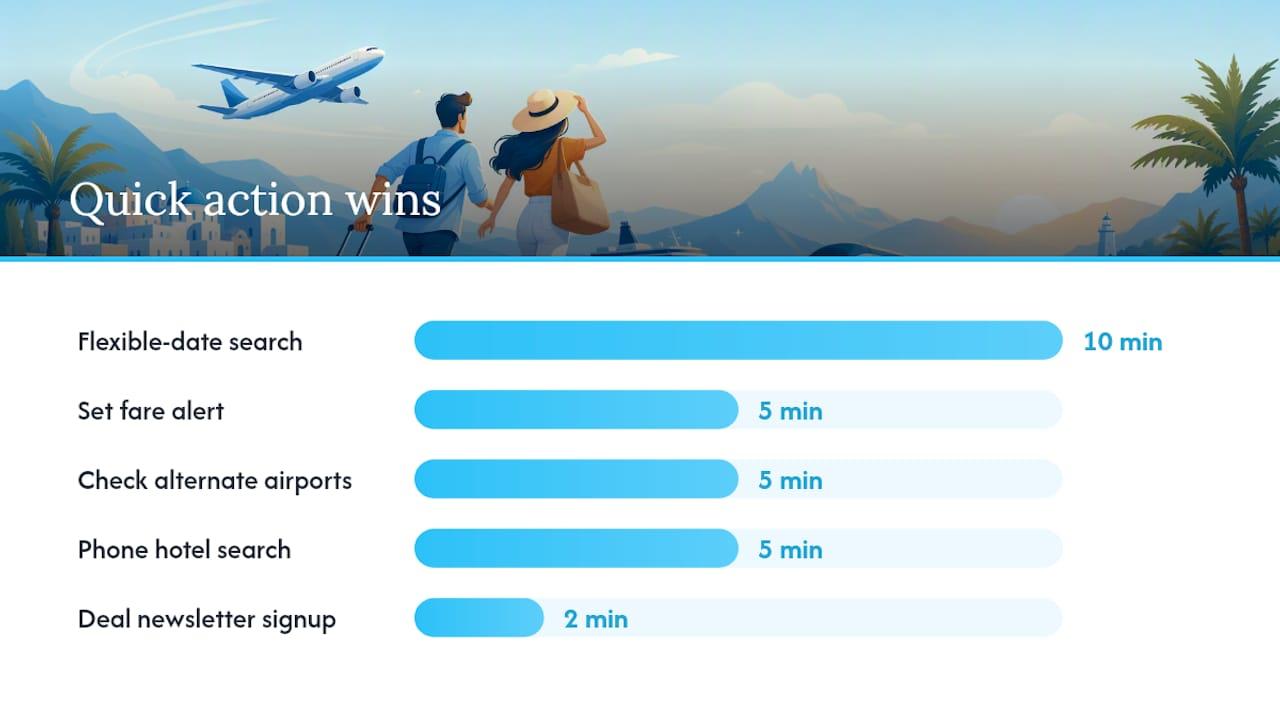
- Set a fare alert (5 minutes): Open Google Flights, search your route, and click “Track prices.” You’ll get an email the moment the fare drops.
- Run a flexible-date search (10 minutes): Use the calendar or “cheapest month” view on any major metasearch to see price variance across a full month at a glance.
- Check alternate airports (5 minutes): Flying into a secondary airport nearby often shaves $50–$150 off a round trip, especially on budget carriers.
- Switch to your phone for hotel searches (5 minutes): Some hotels and booking platforms offer mobile-only discounts of up to 40% that don’t appear on desktop.
- Sign up for one deal newsletter (2 minutes): Flash sales from travel deal newsletters frequently undercut indexed comparison results, and acting within hours of the alert is often the difference between getting the deal and missing it.
- Join a cashback portal (5 minutes): Sites like Rakuten or TopCashback pay you a percentage back on bookings made through their links.
Pro Tip: Open hotel searches in your phone’s browser in private/incognito mode. Some platforms detect repeat visitors and suppress their best rates. A fresh mobile session in incognito often surfaces lower prices that a logged-in desktop search won’t show.
1. Use flexible-date and multi-airport flight searches
The single biggest lever on flight prices is flexibility. A Tuesday or Wednesday departure typically costs less than a Friday or Sunday on the same route, and midweek travel and shoulder seasons consistently produce lower fares across most markets.
Run your search in three passes:
- Metasearch first: Use Google Flights or a similar tool with the calendar view open. Note the cheapest date combination.
- Check the airline direct: Some carriers offer web-only fares or waive booking fees when you buy on their own site.
- Factor in all-in costs: A $189 fare with a $45 checked bag and $25 seat selection is $259. A $219 fare with free carry-on and free seat assignment is cheaper. Always add the extras before comparing.
For a deeper breakdown of how to run this search efficiently, the cheap flights guide on Pilottraveldeals walks through the full process step by step.
2. Benchmark hotel prices, then go direct or mobile
Metasearch sites like Google Hotels or Tripadvisor are the starting point, not the finish line. Once you have a benchmark price, check the hotel’s own website and its mobile app. Hotels sometimes publish mobile-only discounts that can be substantial off the standard rate, and those rates rarely appear on third-party aggregators.
Also watch for mandatory extras that inflate the real cost: resort fees, parking charges, and local city taxes can add $30–$80 per night to a rate that looked competitive on the comparison page. The hotel booking guide on Pilottraveldeals covers how to spot and avoid these add-ons before you commit.
Self-catering apartments and short-term rentals are worth a serious look for trips longer than five nights. The per-night cost is usually lower, and you save on meals by cooking some of them yourself.
3. Decide between a package holiday and DIY booking
Neither packages nor DIY booking is universally cheaper. The right choice depends on your destination, how close to departure you’re booking, and how much risk you’re willing to absorb.
| Scenario | Package likely wins | DIY likely wins |
|---|---|---|
| Popular beach resort, peak summer | ✓ Bulk inventory = lower room rates | |
| Last-minute booking, full flexibility | ✓ Operators discount unsold seats/rooms | |
| Off-beat destination or city break | ✓ More options, better prices | |
| Complex multi-stop itinerary | ✓ Full control over routing | |
| Family with specific hotel needs | ✓ Choose exact property | |
| First-time international traveler | ✓ Single point of support |
Package holidays can deliver financial protection and often beat DIY prices for beach resorts, especially in late-booking windows when operators need to fill unsold inventory. The trade-off is less control over hotel quality and routing. DIY booking frequently wins on price but puts service recovery entirely on you if something goes wrong.
The short rule: If you’re booking a popular beach destination within six weeks of departure and you have full date flexibility, check package prices first. For everything else, benchmark DIY.
Pro Tip: Once you have a DIY price, call a travel agent and read it out. Agents often have access to negotiated rates or can match the price with added extras like airport transfers or room upgrades. It takes five minutes and occasionally saves $100 or more.
4. Time your booking to hit the cheapest window
Timing is one of the most misunderstood parts of finding affordable travel. The general rule: book early for peak-season travel (six to nine months out for long-haul), and stay flexible to hunt last-minute deals for package bargains.
Cheapest days to fly: Tuesday and Wednesday departures are consistently cheaper than weekend flights on most routes. Avoid Friday and Sunday if price is the priority.
Cheapest months to travel: Shoulder season (May, early June, September, October) delivers lower prices and thinner crowds at most popular destinations. Late August can also produce price drops on specific routes as summer demand softens.
Destination pricing example: Which? analyzed package holidays and found Spain’s Costa Blanca to be among the cheapest average summer package destinations in their dataset. Several other Spanish regions ranked similarly. That’s a useful benchmark: if you’re seeing quotes well above that for a comparable Spanish beach trip, you’re either looking at the wrong dates or haven’t compared enough sources.
When to stop waiting and book: Set a price threshold before you start searching. If the fare drops to your target, book it. Waiting for a lower price after you’ve already found a good one is how travelers end up paying more.
5. Avoid the hidden costs that make cheap holidays expensive
A low headline price can evaporate fast. These are the fees that catch travelers off guard and how to sidestep each one.
- Baggage fees: Budget carriers charge $30–$60 each way for a checked bag. Pack everything into a carry-on that fits the airline’s size limit and you pay nothing.
- Seat selection fees: Skip paid seat selection unless you have a specific need. Most airlines assign seats at check-in for free, and the difference between a paid seat and a free one is usually just the row number.
- Dynamic currency conversion (DCC): When a card terminal abroad asks “Pay in dollars or local currency?” always choose local currency. Experts consistently flag DCC as a high-cost trap: the merchant’s exchange rate is almost always worse than your card’s rate, sometimes by 3–5%.
- Resort and hotel fees: These are mandatory charges added at check-in, not shown in the comparison price. Search the hotel name plus “resort fee” before booking.
- Foreign transaction fees: Use a travel card with no foreign transaction fee. Options like the Charles Schwab debit card or the Wise card eliminate this cost entirely.
- Transfer charges: Airport taxis and private transfers are often two to three times the cost of a pre-booked shuttle or public transit. Research the transit options before you land.
Pro Tip: Understanding how currency exchange affects your travel costs before you leave can save you more than any single flight deal. DCC and poor exchange rates are the two most common ways travelers lose money they didn’t realize they were spending.
6. Use comparison sites, agents, and alerts together
Treat comparison sites as a benchmark, not the final price source. The best deals often sit outside what metasearch indexes, in direct airline fares, hotel mobile apps, agent-negotiated rates, and flash sales.
Here’s the workflow that consistently finds the lowest all-in price:
- Search a metasearch tool (Google Flights, Kayak, or a similar platform) to establish a baseline price for your route and dates.
- Check the airline or hotel direct. Some carriers offer web-only fares or waive booking fees on their own site. Hotels sometimes match or beat the metasearch price when you call.
- Run the same search through a cashback portal. If the price is identical, you might as well earn 3–8% back on the booking.
- Check for flash sales. Flash-sale newsletters frequently host time-limited offers that undercut indexed results for short windows. Acting within hours of the alert matters.
- Set an alert and hold. If prices are above your threshold, set a Google Flights alert and check back in a few days. Prices on most routes fluctuate daily.
- Call a travel agent for packages. If a package price is within $50 of your DIY total, an agent may be able to add extras or match the price with better protection.
For a full guide on reading and comparing metasearch results, how to compare travel metasearch sites is a practical external resource worth bookmarking.
The comparison site guide on Pilottraveldeals also walks through how to set alerts, interpret all-in prices, and structure searches for maximum savings.
7. Save money at the destination, not just on the booking
Getting there cheap is only half the equation. Costs at the destination add up fast if you’re not paying attention.
- Use public transit: In most European and Asian cities, a transit pass costs a fraction of daily taxi or rideshare fares. In cities like Madrid or Lisbon, a metro day pass runs under $10.
- Rent a car strategically: For rural destinations or road trips, a rental car often beats the cumulative cost of taxis. Book in advance and compare pickup locations — airport rentals carry a premium surcharge.
- Eat where locals eat: Restaurants one block off the main tourist drag typically charge 30–50% less for the same quality of food.
- Book activities direct: Tour operators listed on third-party platforms charge a commission that gets passed to you. Booking the same tour directly with the operator often saves 10–20%.
- Get a local SIM card: Roaming charges can add $10–$15 per day to your phone bill. A local SIM or an eSIM for your destination costs a fraction of that and keeps you connected without surprises.
8. Pack light and skip the extras that add up
Packing light is one of the most underrated budget moves in travel. Checking a bag on a round trip with a budget carrier can cost $60–$120 before you’ve spent a dollar at your destination.
- Stick to a carry-on that fits within the airline’s free allowance.
- Wear your bulkiest items on travel days.
- Use packing cubes to compress clothing and maximize carry-on space.
- Skip travel-size toiletries and buy them at the destination for less.
Beyond baggage, small decisions around seats, insurance channels, and pre-booked transfers cumulatively save substantial sums over the course of a trip. Pre-book airport parking at least two weeks out (prices rise sharply closer to departure), and compare travel insurance quotes rather than accepting the add-on offered at checkout.
9. Use deal newsletters and loyalty points strategically
Deal newsletters are one of the most passive ways to find cheap holidays. You sign up once, and the deals come to you. The key is acting fast when a good one lands.
- Subscribe to two or three travel deal newsletters relevant to your home airport or preferred destinations.
- Set a budget ceiling before you start reading. Flash deals are designed to create urgency, and it’s easy to book something you didn’t need because the price looked good.
- Loyalty points: If you fly the same airline more than twice a year, joining their frequent flyer program costs nothing and accumulates points that can offset future flights or upgrades. Hotel loyalty programs work the same way and often include member-only rates that beat public prices.
- Credit card travel rewards: A travel rewards card that earns points on everyday spending can generate enough for a free flight within 12 months of regular use, without changing your spending habits.
10. Check student, senior, and membership discounts
These discounts are frequently overlooked because travelers assume they don’t qualify or that the savings are trivial. They’re often neither.
- The International Student Identity Card (ISIC) unlocks discounts on flights, accommodation, and activities in over 130 countries.
- AAA membership includes travel discounts on hotels, car rentals, and vacation packages that regularly exceed the annual membership cost.
- Many museums, attractions, and transit systems offer reduced rates for seniors, students, or families that aren’t advertised at the ticket window. Ask before you pay.
11. Research visa and health requirements before you book
Booking a cheap flight to a destination you can’t legally enter is an expensive mistake. Before you confirm any international booking, spend five minutes on the U.S. government’s foreign travel advice equivalent at travel.state.gov to confirm entry requirements, visa costs, and any current travel advisories.
Health requirements add cost too. Some destinations require specific vaccinations or travel health insurance. Factor those into your total trip cost before comparing destinations.
12. Run a five-minute pre-booking checklist before you pay
This checklist takes under five minutes and eliminates the most common sources of post-booking regret.
Before you click “book”:
- Confirm the all-in price: Add baggage, seat selection, and any mandatory fees to the headline fare. Is it still the cheapest option?
- Check the cancellation and change policy: Free cancellation is worth paying a small premium for, especially on accommodation.
- Verify baggage allowance: Confirm what’s included and what costs extra for every leg of the journey.
- Check transfer inclusion: Is the airport transfer included in a package, or do you need to book it separately?
- Confirm visa and entry requirements: Especially for international travel. A quick check at travel.state.gov takes two minutes.
- Compare travel insurance quotes: Don’t accept the add-on at checkout without comparing it against a standalone policy.
- Set your payment to local currency: If booking a foreign hotel or flight, confirm your card will charge in the local currency, not dollars converted at a poor rate.
For hotel-specific checks, the step-by-step hotel booking guide on Pilottraveldeals covers exactly what to verify before confirming a room.
Key Takeaways
Flexibility on dates and destinations, combined with a benchmark-first comparison approach and strict attention to all-in costs, is the most reliable way to find a genuinely cheap holiday.
| Point | Details |
|---|---|
| Flexibility is the biggest lever | Shifting travel by even one or two days can cut flight costs significantly on most routes. |
| Benchmark before you book | Use metasearch to set a baseline, then check direct, cashback, and agent prices before paying. |
| Pay in local currency | Always select local currency on card payments abroad to avoid DCC fees and poor exchange rates. |
| Packages beat DIY in specific windows | Late-booking beach packages often undercut DIY prices when operators need to fill unsold inventory. |
| Pilottraveldeals aggregates deals in one place | Use Pilottraveldeals to compare flights, hotels, and travel deals and apply the tactics in this guide. |
The part most budget travel guides get wrong
Most budget travel content focuses on the booking phase and stops there. The real savings gap is in the five minutes before you pay and the first 24 hours at the destination.
The pre-booking checklist in this guide isn’t a formality. DCC fees, unchecked baggage policies, and resort fees are where “cheap” holidays quietly become average-priced ones. The travelers who consistently pay less aren’t finding secret deals nobody else sees. They’re running a consistent process: benchmark, check direct, verify all-in costs, pay in local currency, and pre-book the things that cost more when you improvise (transfers, parking, SIM cards).
The other thing worth saying plainly: last-minute package deals are effectively a lottery. They can produce deep discounts if you have complete flexibility on destination and dates, but they rarely save money if you need a specific hotel, specific dates, or family-friendly facilities. If you have constraints, book early. If you have none, wait and watch.
Pilottraveldeals puts the comparison work in one place
Searching five tabs simultaneously gets old fast. Pilottraveldeals aggregates flight deals, hotel comparisons, and travel guides into a single platform, so you can benchmark prices, read destination tips, and apply the tactics in this guide without switching between a dozen sites.

The site covers everything from finding affordable domestic flights to hotel deal comparisons and destination guides, with claimed savings of up to 80% on selected deals. If you’re ready to put the checklist above into action, start your search at Pilottraveldeals.com and use the flight and hotel tools to run your benchmark in one place.
Useful sources and tools for deal hunting
These are the resources cited in this guide and the tools worth bookmarking for your next search.
- Which? — Cheapest package holiday destinations 2026 — destination price analysis across 5,393 packages.
- iNews — Ultimate guide to cheaper summer holidays — timing, comparison workflow, and weekday pricing data.
- The Independent — Cheap family holidays abroad 2026 — DIY vs. package trade-offs and destination picks.
- BBC — Pay in local currency advice — DCC explained and why local currency always wins.
- GorillaFare — How to compare travel metasearch sites — practical guide to reading and comparing metasearch results.
- ISIC — International Student Identity Card — student discounts on travel in 130+ countries.
- Pilottraveldeals — How to use travel comparison sites — alerts, price interpretation, and comparison workflows.
- Pilottraveldeals — Budget travel hacks — broad tactics covering quick wins and money-saving checklists.
Recommended
- 7 Essential Tips for a Cheap Family Travel Guide – PilotTravelDeals.com
- 7 Smart Steps for an Effective Cheap Travel Checklist – PilotTravelDeals.com
- Budget travel guide: Proven strategies to save on every trip – PilotTravelDeals.com
- Unlocking Affordable Adventures: Tips for Cheaper Travel Without Sacrificing Fun – PilotTravelDeals.com


