Searching endlessly for affordable domestic flights only to watch prices jump the moment you decide to book is frustrating. You compare dozens of sites, track fares for weeks, yet still wonder if you overpaid. The truth is, airline pricing operates on complex algorithms that shift fares multiple times daily, making it hard to know when to pull the trigger. This guide delivers expert-backed strategies to help you navigate this dynamic pricing landscape and secure genuinely cheap domestic flights in 2026, saving you significant money on every trip.
Table of Contents
- Understanding How Domestic Flight Pricing Works
- When And How To Book For The Cheapest Domestic Flights
- Best Tools And Strategies To Find And Monitor Cheap Flights
- Tips For Flexible Travel And Maximizing Savings
- Explore Cheap Flights And Travel Deals At PilotTravelDeals.com
- Frequently Asked Questions About Booking Cheap Domestic Flights
Key takeaways
| Point | Details |
|---|---|
| Optimal booking windows matter | Booking domestic flights 6-8 weeks ahead for regular travel and 3-6 months for peak periods yields the best prices. |
| Midweek flights save money | Flying Tuesdays or Wednesdays can reduce costs by 13-20% compared to weekend departures. |
| Use multiple platforms | No single booking site is universally cheapest, so compare at least three tools and set price alerts. |
| Flexibility unlocks savings | Adjusting travel dates by a day or two and choosing shoulder seasons dramatically lowers fares. |
| Price algorithms fluctuate constantly | Airlines reprice seats up to 100 times daily, so monitoring and acting decisively on good deals is essential. |
Understanding how domestic flight pricing works
Airline pricing feels like a mystery, but understanding the mechanics behind it gives you a strategic edge. Flight prices fluctuate constantly due to supply and demand dynamics and remaining seat inventory. Airlines don’t randomly set fares. They use sophisticated yield management systems that analyze booking patterns, competitor pricing, and historical data to optimize revenue on every flight.
These systems create automated pricing algorithms that adjust fares in real time. Your seat might be repriced dozens of times in a single day as the algorithm responds to new bookings, cancellations, and market shifts. Airlines maintain a limited set of fare buckets at different price points. As lower-priced seats sell out, the system automatically moves remaining inventory into higher brackets.
Think of it as a high-frequency auction where the price you see today might vanish tomorrow. This creates both challenge and opportunity. The challenge is unpredictability. The opportunity is that prices can drop just as quickly as they rise, especially when airlines need to fill seats approaching departure. Knowing this helps you understand why tips to book cheap flights emphasize timing and monitoring.
Airlines use predictive models to forecast demand weeks in advance, adjusting prices to maximize revenue while ensuring flights fill. Your job is to outsmart these models by booking when algorithms temporarily underprice seats or when competition forces fare reductions.
The key insight is that fare pricing is neither random nor fixed. It’s a calculated dance between supply, demand, and competitive pressure. By understanding this system, you can time your purchases strategically and leverage fare comparison benefits to identify when prices hit favorable points. The algorithms work for airlines, but with the right approach, you can make them work for you too.
When and how to book for the cheapest domestic flights
Timing separates travelers who overpay from those who score genuine deals. For regular domestic travel, the sweet spot is 6-8 weeks before departure. This window typically offers the best balance between availability and price. Airlines have released their full inventory, early bird discounts are active, but last-minute price spikes haven’t kicked in yet.
Peak travel periods demand earlier action. Thanksgiving, Christmas, spring break, and summer vacations require booking 3-6 months ahead to secure reasonable fares. Waiting until the 6-week mark during these periods often means paying premium prices or finding limited seat availability. Set calendar reminders to start searching well in advance for holiday trips.
The day you fly matters enormously. Research consistently shows that flying Tuesday or Wednesday unlocks cheaper fares than weekend departures. Google data confirms that Tuesday is the most economical day to fly, with Mondays and Wednesdays close behind. Weekend flights cost 13-20% more on average because leisure travelers cluster their departures around Friday through Sunday.
Pro Tip: Search flights using a flexible date calendar view to visualize price differences across an entire week or month. You’ll often find that shifting your departure by just one day saves $50-$100 per ticket.
Optimal booking timeline for domestic flights:
- Regular travel: 6-8 weeks before departure
- Peak holiday periods: 3-6 months in advance
- Last-minute deals: Sometimes 1-3 weeks out, but risky and unreliable
- Shoulder season travel: 4-6 weeks provides good options
| Travel Period | Ideal Booking Window | Expected Savings |
|---|---|---|
| Regular weekday | 6-8 weeks ahead | Baseline pricing |
| Peak holidays | 3-6 months ahead | Avoid 30-50% premiums |
| Midweek flights | Any booking window | 13-20% vs weekends |
| Shoulder season | 4-6 weeks ahead | 15-25% vs peak |
Avoid booking flights that depart or arrive on weekends unless absolutely necessary. The premium you pay for Friday evening or Sunday return flights adds up quickly, especially for families. If your schedule allows even minimal flexibility, flexible travel dates become your most powerful savings tool. Airlines know most travelers are locked into weekend schedules, so they price accordingly. Breaking that pattern immediately puts you ahead.
The combination of proper booking windows and strategic travel days creates compound savings. A Tuesday departure booked 7 weeks out might cost 30-40% less than a Friday departure booked 2 weeks out for the same destination. These aren’t marginal differences. They’re the gap between budget-friendly travel and financial strain. Master these smart domestic flight booking tips and you’ll consistently outperform the average traveler on price.
Best tools and strategies to find and monitor cheap flights
No single booking platform dominates every route. Performance depends on route complexity and airline relationships, so smart travelers use multiple tools. Google Flights excels at speed and clean interface. Skyscanner often finds cheaper international connections and alternative airports. Hopper provides price predictions and freeze options that add strategic value.

The winning strategy is comparison shopping across at least three platforms. Set up price alerts on each for your target route. This takes 10 minutes but can save hundreds of dollars. Each platform has different airline partnerships and access to various fare classes, meaning one might show deals the others miss.
Hopper deserves special attention for its predictive technology. Their price-drop forecasting accuracy reaches 82% within $15, which is remarkably reliable. The app tells you whether to book now or wait, removing guesswork from your decision. When Hopper says buy, historical data suggests it’s usually correct.
Step-by-step flight monitoring process:
- Identify your target route and flexible date range
- Set up price alerts on Google Flights, Skyscanner, and Hopper simultaneously
- Check alerts daily but avoid obsessive searching, which triggers cookie-based price increases
- Note the lowest price you see in the first week as your baseline
- Act when alerts show prices 10-15% below your baseline or when Hopper recommends buying
- Clear browser cookies or use incognito mode when doing final price checks
| Platform | Best For | Key Feature |
|---|---|---|
| Google Flights | Speed and clean interface | Flexible date calendar view |
| Skyscanner | International routes | Alternative airport suggestions |
| Hopper | Price predictions | 82% accurate buy/wait recommendations |
| Kayak | Comprehensive comparison | Price trend graphs |
Pro Tip: Airlines adjust prices based on demand signals, including repeated searches from the same IP address. Use incognito mode or clear cookies before final booking to ensure you see the true lowest price, not an inflated one based on your search history.
Refresh your searches periodically throughout the day. Prices can drop during off-peak hours when algorithms detect lower booking activity. Early morning and late evening sometimes reveal better deals than midday searches. This isn’t universal, but it’s worth checking if you’re monitoring a specific route closely.
Act decisively when price alerts hit your target threshold. The algorithms that dropped the price can raise it just as quickly. If you’ve done your research and know the typical range for your route, don’t wait for perfection. A good deal today beats a theoretical better deal that might never materialize. Hesitation costs money in the dynamic pricing environment airlines have created.
Leverage these cheap airfare tips by combining platform strengths. Use Google Flights for initial research and date flexibility exploration. Set Hopper alerts for predictive guidance. Check Skyscanner for alternative routing options. This multi-tool approach ensures you capture the best available price regardless of which platform happens to have it. The few extra minutes of comparison consistently pay dividends that far exceed the time invested. For more comprehensive strategies, explore these tips to save on flights that cover additional booking tactics.
Tips for flexible travel and maximizing savings
Flexibility is the ultimate weapon in your cheap flight arsenal. Rigid travel dates force you to accept whatever price airlines demand for those specific days. Shoulder season travel provides cheaper flights because you’re avoiding the crush of peak demand. The weeks just before and after major holidays, or the months between summer and winter peak seasons, offer substantially lower fares with nearly identical weather and experiences at your destination.
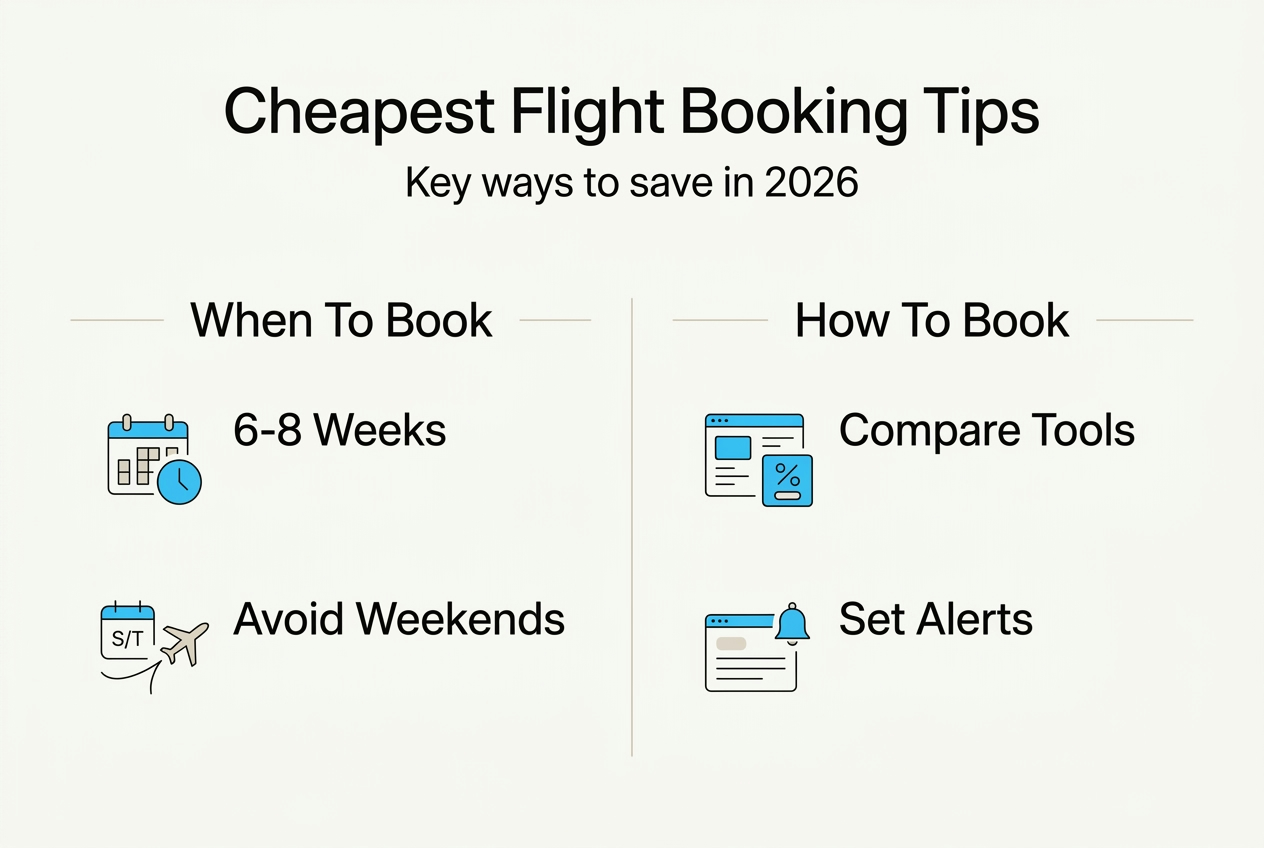
Weekend avoidance extends beyond departure days. Arriving on Saturday or Sunday also costs more because airlines know leisure travelers prefer weekend arrivals. If you can land on a Thursday evening or Monday morning instead, you’ll often see significant savings. The pattern is consistent: whenever you can zipper around the edges of peak travel times, prices drop.
Date flexibility doesn’t mean you need infinite options. Even a two or three day window around your preferred dates opens up savings opportunities. Most booking platforms offer flexible date searches that display prices across a range. You might discover that leaving Thursday instead of Friday, or returning Tuesday instead of Monday, cuts your total cost by 20-30%.
Flexibility tactics that maximize savings:
- Adjust travel dates by 1-3 days in either direction
- Consider nearby alternative airports if you’re in a major metro area
- Book separate one-way tickets if round-trip pricing is inflated
- Explore red-eye flights, which often cost less due to lower demand
- Be willing to take one connection instead of nonstop if savings are substantial
Pro Tip: Start tracking prices 10-12 weeks before your ideal travel date, even if the optimal booking window is 6-8 weeks out. This extended monitoring period helps you understand the price range and identify true deals when they appear, rather than guessing whether a fare is actually good.
The advice to start tracking early and book when it’s good, not perfect, is crucial. Waiting for the absolute lowest possible price is a losing strategy because you’ll never know when you’ve hit bottom until prices rise again. If you’ve tracked a route for several weeks and see a price 15-20% below the average you’ve observed, that’s your signal to book.
Price alerts and monitoring tools support this approach by doing the watching for you. Set your alerts with a target price based on your research, then let the tools notify you when fares hit that threshold. This removes the emotional decision making and grounds your purchase in data rather than fear of missing out or hope for even better deals.
Flexibility also means being open to slight routing changes. Sometimes flying into a nearby airport and renting a car for a short drive saves more than the rental costs. Or taking a connection through a different hub opens up cheaper fare classes. The rigid mindset of “I must fly nonstop from Airport A to Airport B on exactly these dates” severely limits your options and guarantees higher prices. Loosening any of those constraints immediately expands your savings potential.
Apply these ways to get cheapest flights by building flexibility into your travel planning from the start. When possible, choose vacation destinations based partly on current flight deals rather than deciding the destination first and then searching for flights. This inverted approach lets you take advantage of temporary price drops and airline sales that might make an alternative destination more attractive and affordable.
Explore cheap flights and travel deals at PilotTravelDeals.com
You’ve learned the strategies airlines don’t want you to know, from optimal booking windows to multi-platform comparison tactics. Now take these insights further with resources designed specifically for budget-conscious travelers. PilotTravelDeals.com aggregates flight deals, hotel discounts, and travel tips into one streamlined platform, helping you apply everything you’ve learned here across all aspects of your trip planning.

Our dedicated cheap airfare tips section expands on the strategies covered here with route-specific advice and current deals. Beyond flights, explore our hotel deals to extend your savings to accommodations, often achieving the 80% total trip savings our users report. The travel comparison sites guide walks you through maximizing every booking platform’s unique strengths, ensuring you never overpay again. Start saving on your next domestic flight today by putting these proven tactics into action.
Frequently asked questions about booking cheap domestic flights
When should I book domestic flights for holiday travel?
Book holiday flights 3-6 months in advance to secure reasonable prices and good seat selection. Thanksgiving and Christmas flights sell out quickly at lower fare buckets, so earlier booking is essential. Waiting until the typical 6-8 week window for holiday periods usually means paying 30-50% premiums.
How do flight price alerts actually work?
Price alerts monitor your selected route continuously and notify you via email or app when fares drop below your target threshold. They track real-time pricing changes across multiple airlines and fare classes. Set alerts on several platforms simultaneously because each has different airline partnerships and may catch deals others miss.
What are the absolute cheapest days to fly domestically?
Tuesday is consistently the most economical day to fly, with Wednesday and Monday close behind. These midweek days see 13-20% lower fares than Friday through Sunday departures. Avoid weekend travel entirely if your schedule allows any flexibility, as leisure traveler demand drives weekend prices significantly higher.
Why does flexible date searching save so much money?
Flexible date searches reveal price variations across multiple days simultaneously, showing you exactly when fares dip. Airlines price different days based on predicted demand, so shifting travel by even one day can move you from a high-demand fare bucket to a lower one. This visibility lets you optimize around the pricing algorithm rather than accepting whatever your rigid dates cost.
Should I use Google Flights, Skyscanner, or Hopper for booking?
Use all three platforms because no single site is universally cheapest. Google Flights offers the best interface and speed for initial research. Skyscanner often finds cheaper international connections and alternative routings. Hopper provides 82% accurate price predictions that remove guesswork from buy/wait decisions. Compare across all three and book wherever you find the lowest price. For comprehensive booking strategies, check these smart ways to find cheap flights that integrate multiple platform strengths.
Do airlines really change prices based on my search history?
While airlines deny using cookies to raise prices for repeat searchers, many travelers report seeing price increases after multiple searches. Use incognito mode or clear your cookies before final booking as a precaution. This ensures you see the true market price rather than any potential demand signal pricing based on your browsing behavior.
Recommended
- How to Get Cheapest Domestic Flights Step-by-Step Guide – PilotTravelDeals.com
- Tricks to find cheap flights: expert tips for 2026 – PilotTravelDeals.com
- 7 Smart Ways to Find Cheap Domestic Flights Easily – PilotTravelDeals.com
- Find cheap business class flights in 2026: proven guide – PilotTravelDeals.com
- 7 Съвета за Спестяване при Дентален Туризъм | Момани