

Over 80 percent of American solo travelers now rely on mobile booking apps to find affordable flights and last-minute deals. For those on a tight budget, wasting hours comparing prices or missing out on flash sales can make travel stressful and costly. Discovering the right mobile booking tools can dramatically simplify trip planning, help stretch every dollar, and put real-time travel choices in the palm of your hand.
Table of Contents
- Defining Mobile Booking Apps For Travelers
- Main Types Of Mobile Booking Platforms
- Core Features And How They Work
- Benefits For Budget-Conscious Solo Travelers
- Risks, Costs, And Common Mistakes
- Comparisons With Traditional Booking Methods
Key Takeaways
| Point | Details |
|---|---|
| Mobile Booking Apps Enhance Travel | These platforms provide comprehensive tools for trip planning, booking, and management. |
| Variety of Platforms Available | Users can choose from global aggregator apps, local-specific apps, and specialized platforms. |
| Personalization is Key | Advanced algorithms offer tailored travel recommendations based on user preferences. |
| Awareness of Risks is Essential | Travelers should understand potential privacy concerns, hidden fees, and common mistakes. |
Defining Mobile Booking Apps for Travelers
Mobile booking apps represent sophisticated digital platforms that transform how travelers plan, book, and manage their journeys. These digital tools leverage smartphone capabilities to provide comprehensive travel management solutions across multiple aspects of trip planning.
At their core, mobile booking apps function as comprehensive travel companions, integrating various services into a single, user-friendly interface. They go beyond simple reservation systems, offering features like real-time destination information, personalized recommendations, instant booking confirmations, and seamless payment options. Travelers can now research locations, compare prices, book accommodations, secure transportation, and even plan local activities all from their smartphone screens.
The technological sophistication of these apps enables context-aware services that adapt to individual traveler preferences. Advanced mobile booking platforms utilize machine learning algorithms to suggest personalized travel options based on previous search history, budget constraints, and specific travel interests. This means solo travelers can receive tailored recommendations that match their unique preferences, whether they’re seeking budget hostels, adventure experiences, or luxury accommodations.
Pro tip: Always download mobile booking apps before your trip and enable offline mode to ensure access to critical travel information even without constant internet connectivity.
Main Types of Mobile Booking Platforms
Mobile booking platforms have evolved to offer travelers a diverse range of digital solutions tailored to specific travel needs. Tourism mobility apps can be categorized into distinct types that address different aspects of travel planning and management, providing comprehensive support for modern travelers.
These platforms typically fall into several key categories. Global aggregator apps serve as comprehensive travel companions, offering broad services across multiple destinations. These include well-known platforms that allow users to compare prices, book flights, hotels, and rental cars from a single interface. In contrast, local-specific apps focus on providing hyper-targeted experiences for particular destinations, offering insider information about local transportation, attractions, and cultural experiences that global platforms might overlook.
Another significant category includes specialized booking platforms that concentrate on specific travel segments. Some apps specialize in budget travel, focusing on hostels and cheap accommodations, while others target luxury travelers with curated high-end experiences. Niche platforms might concentrate on adventure travel, business trips, or specific regions, providing tailored recommendations and booking options that meet unique traveler preferences. These specialized apps often integrate advanced features like real-time translation, local event calendars, and personalized itinerary planning.
Here’s a quick overview of the main types of mobile booking platforms and their core advantages:
| Platform Type | Key Advantage | Typical User Scenario |
|---|---|---|
| Global Aggregator Apps | Broad service coverage | Multi-country trip planning |
| Local-Specific Apps | Local insights and recommendations | Exploring a single destination |
| Specialized Platforms | Tailored travel experiences | Luxury, business, or adventure |
Pro tip: Download multiple mobile booking apps before traveling to compare prices and access diverse booking options, ensuring you have comprehensive travel resources at your fingertips.
Core Features and How They Work
Mobile booking apps have revolutionized travel planning through sophisticated technological integrations. Mobile booking apps provide core features that streamline the entire travel experience by combining multiple services into a single, user-friendly platform. These digital tools leverage advanced technologies to transform how travelers research, book, and manage their journeys.
The technological backbone of these apps includes several critical components. GPS integration enables real-time location tracking and navigation, allowing users to find nearby attractions, restaurants, and transportation options with remarkable precision. Artificial Intelligence powers personalized recommendation engines that analyze user preferences, past travel history, and current search patterns to suggest tailored travel experiences. Push notifications keep travelers informed about flight updates, hotel reservations, local events, and potential travel disruptions, ensuring constant connectivity and immediate access to crucial travel information.
Advanced mobile booking platforms go beyond simple reservation systems by offering comprehensive travel management ecosystems. These apps typically include features like digital wallet integration for seamless payments, language translation tools, offline access to booking confirmations, and real-time price comparison mechanisms. Some platforms even incorporate augmented reality features that allow users to preview hotel rooms, explore destination landscapes, and get virtual tours before making booking decisions. The integration of machine learning algorithms continuously refines these recommendations, creating increasingly personalized and intelligent travel planning experiences.
Pro tip: Enable location services and notifications in your mobile booking apps to receive the most accurate, real-time travel recommendations and updates.
Benefits for Budget-Conscious Solo Travelers
Solo travelers seeking cost-effective travel solutions have found a powerful ally in mobile booking apps. Mobile apps simplify managing travel expenses by consolidating multiple booking options in one platform, providing unprecedented control over travel budgets and spending strategies.

These digital platforms offer strategic cost-saving features specifically designed for budget-conscious travelers. Intelligent price comparison tools automatically scan multiple providers, highlighting the most economical flight and accommodation options. Sophisticated algorithms track price fluctuations, sending real-time alerts about sudden discounts or flash sales that can dramatically reduce travel expenses. Additionally, many apps provide detailed budget tracking features, allowing travelers to monitor spending in real-time, categorize expenses, and set daily financial limits to prevent overspending.
Beyond simple price tracking, mobile booking apps unlock unique opportunities for solo travelers to maximize value. Personalized deal recommendations consider individual travel preferences, past booking history, and current budget constraints to suggest tailored money-saving opportunities. Some platforms offer exclusive discounts for solo travelers, including single-occupancy rates, last-minute booking deals, and bundled service packages that reduce overall trip expenses. The apps’ ability to aggregate loyalty program points, compare multi-city travel options, and provide transparent pricing makes them indispensable tools for travelers looking to stretch their travel dollars further.
Pro tip: Enable price alerts and notifications on multiple booking apps to catch unexpected discounts and compare real-time pricing across different platforms.
Risks, Costs, and Common Mistakes
Travelers must approach mobile booking apps with a critical eye, understanding the potential pitfalls that can undermine their travel experience. Mobile travel apps pose significant risks including privacy concerns and potential for misinformation, making it essential to navigate these digital platforms with caution and awareness.
Data privacy represents a primary concern for travelers using mobile booking apps. Many applications request extensive personal information and location tracking, which can expose users to potential security breaches. Hidden fees are another critical issue, with some apps embedding complex pricing structures that may not be immediately apparent. Users might encounter unexpected charges through service fees, currency conversion costs, or seemingly minor add-ons that can significantly inflate the total trip expense. Cancellation policies can be particularly treacherous, with some platforms implementing strict rules that limit refund options or charge substantial penalties for modifications.
Beyond financial risks, travelers frequently make critical errors that compromise their booking experience. Common mistakes include blindly trusting app recommendations without cross-referencing information, neglecting to read user reviews, and failing to understand the full terms of service. Some travelers overlook app permissions, inadvertently granting unnecessary access to personal data. Technical limitations like slow app performance, unreliable internet connectivity, and inconsistent user interfaces can also create significant travel disruptions. Moreover, digital literacy plays a crucial role in effectively using these platforms, with less tech-savvy travelers more vulnerable to potential pitfalls.
Pro tip: Always screenshot your booking confirmations, read app permissions carefully, and maintain a backup of critical travel documents outside of mobile apps.
Comparisons with Traditional Booking Methods
Mobile booking apps dramatically transform travel planning, presenting a stark contrast to traditional booking methods that have dominated the travel industry for decades. Where travel agents once held exclusive access to booking information, digital platforms now empower travelers with instant, comprehensive research capabilities that fundamentally reshape how trips are planned and executed.
Traditional booking channels typically involved significant time investments and limited information access. Travel agencies required in-person visits, phone consultations, and manual paperwork, with pricing and availability determined by agents’ direct relationships with providers. Modern mobile apps, in contrast, provide real-time global comparisons that instantly display hundreds of options across multiple airlines, hotels, and transportation services. Travelers can now compare prices, read instantaneous reviews, and make informed decisions within minutes, something previously impossible through conventional booking mechanisms.
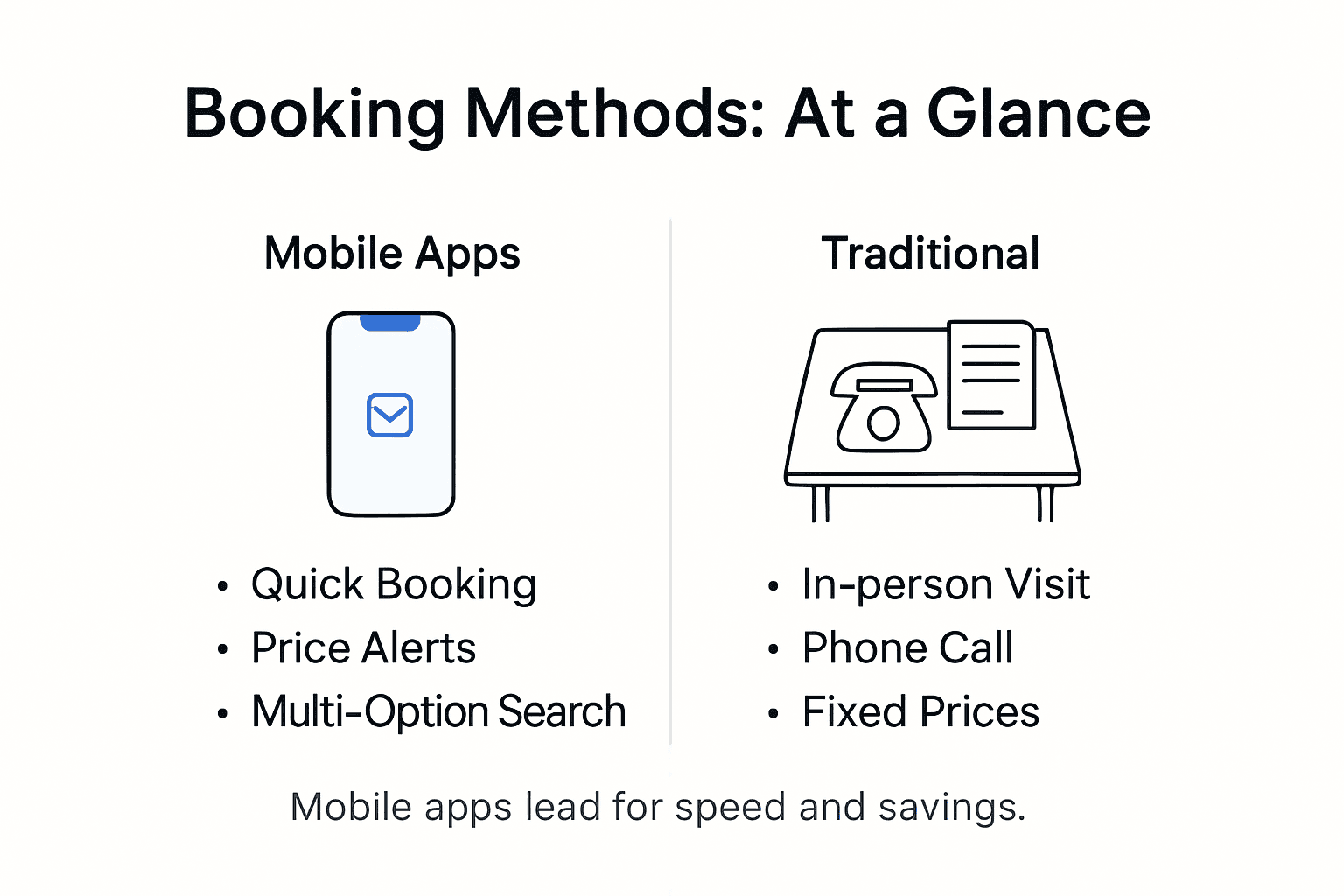
The economic differences between traditional and mobile booking methods are equally profound. Physical travel agencies often charged substantial consultation fees and worked with more limited supplier networks, resulting in potentially higher costs for travelers. Mobile booking platforms leverage massive data infrastructures and algorithmic pricing models that can identify price inefficiencies, negotiate bulk discounts, and present travelers with more competitive pricing structures. Additionally, these digital platforms offer unprecedented transparency, displaying complete cost breakdowns, including taxes and fees that traditional booking methods frequently obscured.
The table below highlights the economic and convenience differences between traditional and mobile booking methods:
| Booking Method | Cost Transparency | User Convenience | Data Access Depth |
|---|---|---|---|
| Traditional Agent | Hidden fees common | Requires manual steps | Limited by agency network |
| Mobile App | Full breakdown shown | Instant bookings possible | Global data comparisons |
Pro tip: Always cross-reference mobile app prices with traditional booking channels to ensure you’re getting the most competitive rate possible.
Maximize Your Savings and Travel Smarter with Mobile Booking Tools
Are you tired of juggling multiple apps and missing the best travel deals? This article highlights how mobile booking apps save time and money but also warns about pitfalls like hidden fees and confusing cancellations. If you want clear price transparency and easy comparisons to stretch your travel budget further, PilotTravelDeals.com is your perfect companion. We aggregate offers on flights, hotels, bike rentals, and SIM cards so you can find up to 80% savings with just a few clicks.
Discover how to avoid common booking mistakes and access exclusive discounts by exploring our Travel Tips for savvy travelers. For fresh insights and unique travel inspiration, check out our Miscellaneous articles to boost your itinerary planning. The future of affordable travel is just a tap away. Start comparing and booking smarter right now at PilotTravelDeals.com to unlock the best deals and travel with confidence.
Frequently Asked Questions
What features do mobile booking apps offer that save time?
Mobile booking apps provide real-time price comparisons, personalized recommendations, instant booking confirmations, and offline access to travel information, all of which streamline the trip planning process and save travelers valuable time.
How can mobile booking apps help me save money on travel?
These apps often include intelligent price tracking tools, which notify users of price fluctuations and special deals. Additionally, they may offer exclusive discounts for specific travel segments, helping users find lower rates for flights and accommodations.
Are there any risks associated with using mobile booking apps?
Yes, there are potential risks such as data privacy concerns, hidden fees, and possible misinformation. Travelers should be cautious about the permissions they grant and read the full terms of service before booking.
How do mobile booking apps compare to traditional booking methods?
Mobile booking apps provide greater convenience and cost transparency compared to traditional booking methods. They allow for instant access to global travel options, enabling users to conduct real-time comparisons and make informed decisions quickly.

