
TL;DR:
- Flying midweek, especially Tuesdays and Wednesdays, usually offers the lowest American Airlines fares.
- Booking domestic flights 1 to 3 months in advance generally yields the best prices.
- Combining flexible travel dates, fare alerts, loyalty points, and early booking maximizes savings.
Airfare pricing can feel like a guessing game. One day a flight costs $180, the next it jumps to $340 for the same route. Most travelers assume it’s random, but it’s not. American Airlines, like every major carrier, follows pricing patterns that budget-conscious flyers can actually use to their advantage. This guide breaks down the cheapest days to fly American Airlines, the best times to book, and the strategies that stack real savings. No guesswork, no luck required. Just clear, evidence-backed tactics you can apply before your next trip.
Table of Contents
- Why flight prices fluctuate and how timing matters
- Cheapest days to fly American Airlines: What the data shows
- When to book for the best deals
- Other ways to maximize savings on American Airlines
- The real secret to snagging the cheapest American Airlines flights
- Save even more: Essential flight booking resources
- Frequently asked questions
Key Takeaways
| Point | Details |
|---|---|
| Midweek is cheapest | Flying Tuesday or Wednesday can significantly lower your American Airlines fare. |
| Book in advance | Booking 1–3 months out for domestic and 2–8 months out for international flights saves most. |
| Stay flexible | Alternate dates and nearby airports often lead to better deals on American tickets. |
| Stack your savings | Use airline miles, loyalty perks, and package deals to boost your total savings. |
Why flight prices fluctuate and how timing matters
Airline pricing is not set once and left alone. American Airlines adjusts fares dynamically, sometimes dozens of times per day, based on a mix of factors that shift constantly. Understanding what drives those changes is the first step to beating the system.
Several core forces push fares up or down on any given day:
- Seat availability: As a flight fills up, remaining seats get more expensive. Early bookers often get the lowest fares simply because more seats are open.
- Travel demand: Holidays, school breaks, and summer months drive demand through the roof. More people competing for the same seats means higher prices.
- Business travel patterns: Corporate travelers tend to book Monday through Friday flights at the last minute and pay premium prices. Airlines price accordingly.
- Competition on routes: On heavily contested routes with multiple carriers, fares tend to stay lower. On routes where American Airlines has less competition, prices climb.
- Day of the week: Leisure travelers flood flights on Fridays and Sundays. That surge in demand pushes prices up on those days specifically.
As the annual airfare study from CheapAir.com confirms, airfares rise and fall based on demand, season, and competition. This is not a mystery. It’s a predictable pattern once you know what to look for.
The practical takeaway is that flying on days with lower leisure and business demand almost always costs less. That’s why learning to spot cheap domestic flights requires understanding these demand cycles, not just refreshing a booking page repeatedly.
“The travelers who save the most aren’t the luckiest. They’re the ones who understand that airlines price seats like a market, not a menu.”
Pro Tip: Set fare alerts on multiple platforms so you see price drops the moment they happen. Waiting for a “good feeling” about the price rarely beats an automated alert.
For a broader look at saving on flights, it helps to combine this timing knowledge with a few other strategies covered later in this guide.
Cheapest days to fly American Airlines: What the data shows
Not all days of the week are created equal when it comes to American Airlines fares. The data is pretty consistent, and once you see the pattern, you’ll never book a Sunday flight without checking the alternatives first.
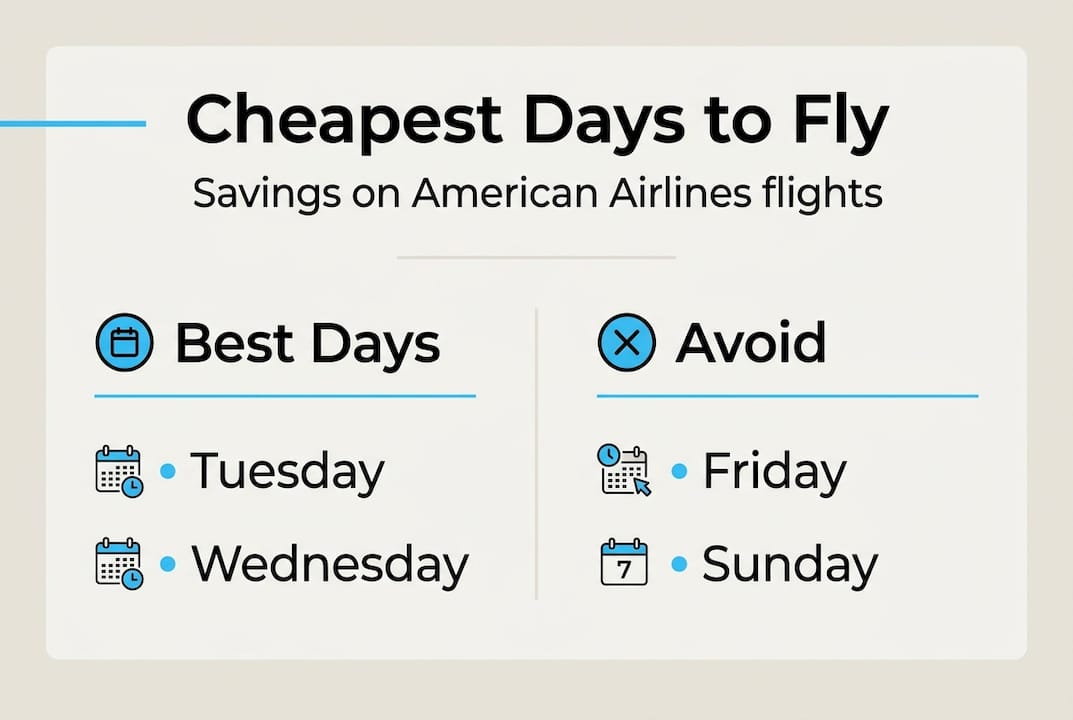
According to The Points Guy, midweek flights on Tuesdays and Wednesdays are typically the cheapest days to fly on American Airlines. Saturday also tends to come in lower than the weekend peaks. Here’s how the week generally breaks down:
| Day of week | Typical fare level | Notes |
|---|---|---|
| Tuesday | Lowest | Best overall for savings |
| Wednesday | Lowest | Comparable to Tuesday |
| Saturday | Low to moderate | Good for weekend trips |
| Monday | Moderate | Business travel starts |
| Thursday | Moderate | Demand picks up |
| Friday | High | Peak leisure travel day |
| Sunday | Highest | Return travel surge |
Flying on a Tuesday instead of a Sunday can save you up to 24% on the same route. That’s not a rounding error. On a $400 round trip, that’s nearly $100 back in your pocket.
A few important exceptions to keep in mind:
- Holiday travel: Thanksgiving week, Christmas, and spring break erase the midweek discount almost entirely. Demand is so high that even Tuesdays get expensive.
- Major events: Cities hosting Super Bowls, large concerts, or conventions see fare spikes across all days.
- Last-minute business routes: Short-haul routes between financial hubs like New York and Chicago can spike on any weekday due to corporate bookings.
For comparison, the cheapest days for United flights follow a similar midweek pattern, which tells you this is an industry-wide trend, not just an American Airlines quirk.
The biggest mistake most travelers make is booking Friday outbound and Sunday return without ever checking Tuesday or Wednesday alternatives. Shifting even one leg of your trip to a cheaper day can make a meaningful difference.
When to book for the best deals
Knowing the cheapest days to fly is only half the equation. When you buy the ticket matters just as much as which day you fly. Book too early and you might overpay. Book too late and prices spike. There’s a sweet spot.

Here’s a practical booking window guide:
| Route type | Ideal booking window | Why it works |
|---|---|---|
| Domestic (U.S.) | 1 to 3 months ahead | Airlines release sale fares in this window |
| International | 2 to 8 months ahead | More lead time needed for complex routes |
| Last-minute domestic | Under 2 weeks | Occasionally works, but risky |
| Holiday travel | 3 to 6 months ahead | Demand fills seats fast |
As Hopper’s 2026 research shows, experts recommend booking domestic flights 1 to 3 months in advance for the best pricing. That window is when airlines are most likely to release promotional fares to fill seats.
Here’s a step-by-step approach to booking smart:
- Start searching 3 months out. Set a fare alert the moment you know your travel dates.
- Check prices on Tuesday and Wednesday mornings. Airlines often load new fares overnight, and midweek mornings can surface fresh deals.
- Compare flexible date options. Most booking platforms let you view a calendar of prices. Use it.
- Book when you see a price drop, not when you feel ready. Waiting for a better deal often means watching prices climb.
- Avoid booking on weekends. Contrary to popular belief, weekend booking doesn’t always mean higher prices, but weekday mornings tend to surface better fares more reliably.
Pro Tip: Late-night searches, particularly between 10 p.m. and midnight, sometimes surface fares that haven’t yet been matched by competitors. It’s not guaranteed, but it’s worth a quick check before bed.
Pair these booking habits with the flight savings tips on our site for a more complete strategy.
Other ways to maximize savings on American Airlines
Once you’ve nailed down your travel day and booking window, there are several more layers of savings available to you. Most travelers leave these on the table.
Loyalty points and miles are one of the most underused tools. American Airlines’ AAdvantage program lets you earn miles on every flight, and those miles can offset future ticket costs significantly. The program also connects to hotel stays, car rentals, and credit card spending, so miles add up faster than most people expect. As American Airlines notes, joining AAdvantage and leveraging airline alliances can yield additional savings beyond the base fare.
Here are more strategies worth stacking:
- Search with flexible dates. Even shifting your trip by one or two days can cut costs by 15% to 20%.
- Bundle flights with hotels or car rentals. American Airlines Vacations packages often include discounts that aren’t available when booking each component separately.
- Use airline alliances. American Airlines is part of the oneworld alliance. Booking through airline alliances savings can open up partner fares and award redemptions you’d miss otherwise.
- Track flash sales and promo codes. American Airlines runs limited-time sales, especially in January and September. Signing up for their email list puts these deals directly in your inbox.
- Search in incognito mode. Some travelers report that repeated searches on the same device can trigger slightly higher prices. Using a private browsing window eliminates that variable.
- Compare bundled hotel deals. Sites like saving on hotels show how combining accommodations with your flight booking can reduce overall trip costs.
Pro Tip: If you hold an AAdvantage credit card, check whether your card offers companion certificates or upgrade credits. These perks can dramatically reduce the effective cost of a flight even when base fares aren’t on sale.
The goal is to layer these strategies. No single tactic cuts costs by 50%, but combining midweek flying, smart booking windows, loyalty points, and bundle deals can get you surprisingly close.
The real secret to snagging the cheapest American Airlines flights
Here’s the honest truth most travel articles won’t tell you: there is no single magic day that guarantees the cheapest fare every time. Tuesdays and Wednesdays are cheaper on average, but averages don’t pay your credit card bill. A Tuesday flight during Thanksgiving week will cost more than a Sunday flight in February.
What actually works is a combination of preparation and flexibility. Travelers who save the most are not the ones who memorized a single rule. They’re the ones who set alerts early, check multiple date combinations, and are willing to adjust their plans when a better price appears. That’s a savvy flyer approach that beats luck every single time.
The real edge comes from treating fare shopping like a process, not a one-time event. Check prices regularly. Know your route’s typical price range so you recognize a genuine deal when it appears. Combine weekday knowledge with the right booking window, loyalty points, and flexible dates. That’s the full picture.
Save even more: Essential flight booking resources
You now have a solid framework for finding cheaper American Airlines flights. But knowing the strategy and having the right tools to execute it are two different things.

At PilotTravelDeals.com, we’ve built resources specifically for travelers who want to stop overpaying. Whether you’re searching for affordable domestic flights or trying to find cheap flights worldwide, our guides and comparison tools help you act fast when deals appear. If you want a clear, cheap flight step-by-step process to follow from search to booking, we have that covered too. Start there and put everything you’ve learned today into action.
Frequently asked questions
Is it really cheaper to fly Tuesdays or Wednesdays on American Airlines?
Yes, fare data consistently shows that midweek flights on Tuesdays and Wednesdays are often the cheapest options on American Airlines, though exceptions exist during holidays and major events.
How far in advance should I book to get the lowest fare on American Airlines?
For the lowest fares, book domestic flights 1 to 3 months ahead and international routes 2 to 8 months ahead for the best pricing windows.
Are there extra fees that make certain days less attractive, even if the base fare is low?
Yes, peak travel days can bring additional surcharges and fees, especially on popular routes and around major holidays, so always check the total cost, not just the base fare.
Does the same ‘cheapest days’ pattern apply to international and domestic flights?
Patterns are similar across both, but as CheapAir’s airfare research notes, international and domestic fares follow comparable weekday trends with some variation depending on the route and season.

