TL;DR:
- Groups hold negotiation power to secure discounts on flights, lodging, and ground transportation.
- Flexibility and comparison shopping are key to maximizing travel savings.
- Early planning and delegation help prevent overspending and logistical issues.
Trying to corral everyone in your group for a trip and keep costs down can feel impossible. Between mismatched budgets, scheduling conflicts, and the sheer volume of bookings, group travel planning can spiral fast. But here’s the thing: groups actually have more leverage than solo travelers when it comes to negotiating deals. With the right approach, you can cut costs significantly on flights, lodging, and ground transport. This guide walks you through five practical steps to book group travel cheaply, avoid the most common money traps, and keep everyone happy without blowing the budget.
Table of Contents
- Step 1: Set your group budget and priorities
- Step 2: Maximize group flight savings
- Step 3: Get the best group deals on lodging
- Step 4: Plan affordable group transportation and expenses
- Step 5: Organize, delegate, and bundle for more savings
- What most group travel guides miss: Real savings come from flexibility and comparison
- Get more group travel deals with PilotTravelDeals.com
- Frequently asked questions
Key Takeaways
| Point | Details |
|---|---|
| Start with a clear budget | Agreeing on costs and tools upfront prevents surprises and helps everyone stay within budget. |
| Compare group and individual rates | Always check both group and single fares to ensure your group gets the best deal. |
| Book early for discounts | Securing flights and lodgings months ahead unlocks group discounts and more options. |
| Bundle for bigger savings | Combining flights, hotels, and activities in packages can save up to 40 percent for groups. |
| Flexibility is key | Being open to dates, airports, and lodging types is the fastest way to cut group travel costs. |
Step 1: Set your group budget and priorities
Before you search for a single flight or hotel, your group needs to agree on money. Skipping this step is the number one reason group trips fall apart or go over budget. A transparent conversation upfront saves a lot of awkward moments later.
Start by identifying the shared expenses every group member will split:
- Flights or transportation to the destination
- Lodging (hotel rooms or vacation rental)
- Ground transport (buses, shuttles, car rentals)
- Group meals and activities
- Travel insurance and fees
For a realistic starting point, Princeton benchmarks for group trips estimate $2,200 to $3,200 per person for an 8 to 9 day trip, including flights, lodging, meals, and ground transport. That range gives you a solid anchor when setting expectations with your group.
Once you have a rough per-person number, poll everyone on comfort level. Some travelers are fine with budget hostels; others need their own bathroom. Knowing this early helps you avoid booking something half the group resents.
For tracking who owes what, use apps like Splitwise or Tab to split costs evenly and avoid the awkward “you owe me” conversations. These tools let everyone see the running total in real time, which keeps things fair and transparent throughout the trip.
Pro Tip: Set a clear rule about optional upgrades before you book anything. If some members want a nicer hotel room or a premium seat on the flight, they pay the difference themselves. This prevents resentment and keeps the shared budget clean.
When you’re planning group travel, think of the budget conversation as the foundation. Everything else, flights, hotels, activities, gets built on top of it. Get this right and the rest of the process becomes much smoother.
Step 2: Maximize group flight savings
Flights are usually the biggest line item in any group travel budget. The good news is that airlines actually want your business in bulk, and they’re willing to deal.
Most airlines require at least 10 passengers to qualify for group flight discounts. Here’s how the savings typically break down:
| Group size | Typical discount |
|---|---|
| 10 to 19 passengers | 15% to 25% off |
| 20 to 49 passengers | 25% to 35% off |
| 50 or more passengers | Up to 40% to 45% off |
To access these rates, contact the airline’s group sales department directly rather than booking through the standard website. They’ll provide a custom quote and sometimes offer perks like flexible name changes or a single group invoice.
Here’s how to approach it step by step:
- Confirm your headcount before reaching out. Airlines won’t negotiate without a firm number.
- Contact group sales at 2 to 3 airlines and request written quotes for the same route and dates.
- Compare those quotes with individual ticket prices on the same flights. Group rates aren’t always cheaper, especially if there’s a flash sale running.
- Lock in timing. Book 3 to 6 months in advance, ideally within the 21 to 115 day window, to capture up to 20 to 30% in additional savings.
- Stay flexible on airports. Flying into a secondary airport near your destination can shave hundreds off the total.
Pro Tip: If your group is under 10 people, skip the group sales desk entirely. You’ll almost always find better fares by booking individually through a tips for cheap flights comparison tool or by using miles and points strategically.
Understanding group airfare explained in detail helps you ask the right questions when you call the airline. And once you’ve locked in your best rate, check group booking discounts to see if any additional promotions apply to your travel dates.
Step 3: Get the best group deals on lodging
After flights, lodging is your next biggest expense. And just like with airlines, hotels are motivated to fill rooms in bulk. That gives your group real negotiating power.
Here’s what to negotiate when you contact a hotel’s group sales team:
- Discounted room block rates (often 10% to 20% below standard pricing)
- Complimentary rooms (typically one free room per 20 to 25 paid rooms)
- Flexible cutoff dates so you’re not stuck paying for rooms people cancel
- Complimentary amenities like breakfast, parking, or meeting space
Secure hotel room blocks 90 or more days out to get the best rates and the most flexibility on terms. The earlier you book, the more leverage you have.

For larger groups, vacation rentals through platforms like VRBO can actually beat hotels on price per person. A large house with multiple bedrooms, a full kitchen, and shared living space often costs less than booking 8 to 10 separate hotel rooms, and it creates a much better group dynamic.
| Lodging option | Best for | Avg. savings potential |
|---|---|---|
| Hotel room block | Mid-size groups (10 to 30) | 10% to 20% off rack rate |
| Vacation rental (VRBO) | Large groups (15 or more) | 20% to 35% vs. hotels |
| Bundled packages | All group sizes | Up to 40% combined |
Pro Tip: If your group has stayed at the same hotel brand before, mention it. Repeat business or a referral from a corporate partner can unlock extra perks that aren’t listed anywhere publicly.
For a step-by-step breakdown of the booking process, check out hotel booking deals and ways to save on hotels. If your plans might shift, flexible hotel booking options give you a safety net without extra cost.
Step 4: Plan affordable group transportation and expenses
Ground transport is the expense that sneaks up on groups. Everyone assumes someone else is handling it, and then you’re scrambling for rides at the airport. Plan this early and you’ll save both money and stress.
Your main options for group ground transport:
- Charter buses: Best for large groups (20 or more). Cost per person drops significantly compared to individual taxis or rideshares.
- Shuttle services: Great for airport transfers. Many hotels offer group shuttle discounts if you ask.
- Van or minibus rentals: Ideal for groups of 8 to 15. One driver, one vehicle, shared cost.
- Rideshare coordination: Works for small groups but gets expensive and chaotic at scale.
For large groups, charter buses are almost always the most cost-effective option. Get at least three quotes and compare the per-person rate against what individual rideshares or car rentals would cost.
Here’s a simple framework for managing shared expenses on the ground:
- Designate a group treasurer who collects funds and pays vendors directly.
- Use Splitwise or a similar app to log every shared expense in real time.
- Set a daily meal budget per person and stick to it. Group dinners at restaurants add up fast.
- Pre-book activities where possible. Many attractions offer group discounts of 10% to 15% for advance bookings of 10 or more.
The biggest mistake groups make is treating ground transport as an afterthought. Book your charter or shuttle at the same time you book your flights, and you’ll often find better availability and lower rates.
For a full breakdown of how to coordinate all these moving parts, the booking group travel guide covers the logistics in detail.
Step 5: Organize, delegate, and bundle for more savings
Even with the best deals locked in, group trips fall apart when no one is clearly in charge. Delegation is not just an organizational nicety. It’s a money-saving strategy.
Assign specific roles to group members:
- Flight coordinator: Handles airline communication, group quotes, and ticketing.
- Lodging lead: Manages hotel block negotiations and vacation rental bookings.
- Transport manager: Coordinates charter buses, shuttles, and airport logistics.
- Itinerary planner: Builds the daily schedule, balances group activities with free time.
- Treasurer: Tracks the shared budget and manages Splitwise or Tab.
Flexibility in your itinerary also saves real money. Delegate planning tasks and book vacation packages for bundled savings of up to 40%. When you build in flexibility on dates or activities, you can pivot to cheaper options without derailing the whole trip.
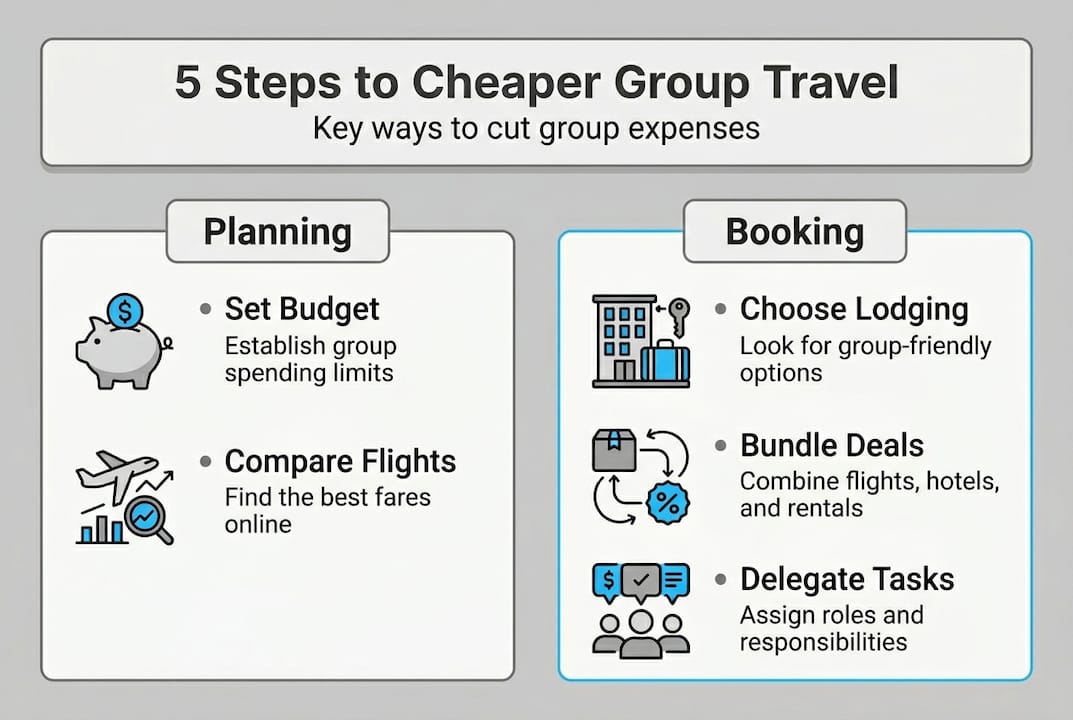
A good group itinerary includes a mix of mandatory group activities (the ones everyone agreed to) and free time blocks where people can explore on their own dime. This reduces the pressure on the shared budget and keeps everyone satisfied.
Pro Tip: When comparing vacation packages, always price out the components separately first. Sometimes the bundle is a genuine deal. Other times, you can beat it by booking flights and hotels independently through a comparison platform.
For more on how [flexible booking importance](https://pilottraveldeals.com/importance-of-flexible booking) plays into your overall savings strategy, it’s worth reviewing before you finalize any bookings.
What most group travel guides miss: Real savings come from flexibility and comparison
Most group travel advice focuses on negotiated rates, bulk discounts, and early booking. That’s all valid. But the single biggest lever most groups overlook is flexibility, specifically, the willingness to shift dates, swap airports, or restructure the itinerary based on where the deals actually are.
Group tours and packages offer real value through bundled inclusions, but they lock you into fixed dates and itineraries. For budget-conscious groups, that rigidity often costs more than it saves. DIY planning with comparison tools takes more coordination, but it lets you chase the deals instead of accepting whatever the package offers.
We’ve seen groups save 25% or more simply by shifting their departure date by two days or flying out of a different airport. That kind of savings doesn’t come from negotiating. It comes from being willing to compare options and maximize travel flexibility at every stage of the booking process.
The groups that consistently travel cheaply aren’t the ones with the best negotiators. They’re the ones who do the comparison work, stay adaptable, and don’t fall in love with a single option before they’ve checked the alternatives.
Get more group travel deals with PilotTravelDeals.com
You’ve got the strategy. Now you need the tools to put it into action without spending hours on research.
At PilotTravelDeals.com, we aggregate deals from dozens of providers so you can compare affordable domestic flights, hotel booking best deals, and more in one place. Our guides and travel comparison sites resources help your group cut through the noise and find verified savings fast. Whether you’re coordinating 10 travelers or 50, we make it easier to compare, book, and save, without the spreadsheet chaos. Start comparing deals today and see how much your group can save.
Frequently asked questions
What is the minimum group size for flight discounts?
Most airlines require at least 10 passengers to qualify for group flight discounts. Smaller groups should compare individual fares instead.
Are group flight rates always cheaper than regular tickets?
No. Group rates aren’t always cheaper than individual fares, especially during sales or for groups under 10. Always compare both before committing.
How far in advance should you book group flights and hotels?
Book flights 3 to 6 months out and secure hotel blocks 90 or more days before your trip for the best rates and most flexibility.
What are the best ways to split group travel expenses?
Apps like Splitwise or Tab make it easy to track and divide shared costs evenly in real time, which prevents disputes and keeps the budget transparent.
Is it cheaper to book group travel packages or plan it yourself?
DIY planning with flexible dates often saves more for budget-conscious groups, but it requires more coordination. Packages include extras but can limit your ability to chase better deals.
Recommended
- How to Plan Group Travel Easily and Save Money – PilotTravelDeals.com
- 8 Smart Ways to Travel for Cheap and Save Big Money – PilotTravelDeals.com
- Step by Step Travel Booking: Save More on Your Next Trip – PilotTravelDeals.com
- 7 Smart Steps for an Effective Cheap Travel Checklist – PilotTravelDeals.com