
TL;DR:
- The primary difference between hostels and hotels lies in privacy and social environment, with hotels providing private rooms and hostels emphasizing shared spaces and communal activities. Hostels tend to be more affordable, especially when including meal savings and reduced transportation costs, making them suitable for budget travelers and solo adventurers. Ultimately, matching accommodation to your trip’s needs—whether privacy, social connection, or comfort—guides the best choice.
Most travelers assume the difference hostel and hotel comes down to one thing: price. Pay less, get less. Pay more, sleep better. That’s the shortcut version, and it misses almost everything that actually matters when you’re planning a trip. The real differences run through privacy, social experience, daily costs, amenities, and traveler type. Once you understand what each accommodation genuinely offers, you’ll stop guessing and start booking with real confidence. This guide covers everything you need to make that call.
Table of Contents
- Key takeaways
- The real difference between a hostel and hotel
- Breaking down the real costs
- Privacy, comfort, and amenities
- Which accommodation fits your travel style
- My take after years of both
- Find the best rates on hostels and hotels
- FAQ
Key takeaways
| Point | Details |
|---|---|
| Cost gap is real but varies | Dorm beds run $15–$50 per night, while budget hotel rooms typically start at $50–$150. |
| Privacy is the core trade-off | Hotels guarantee a private room and bathroom; hostels often require sharing both with strangers. |
| Social life is a hostel feature | Hostels are built around communal spaces and events that hotels simply don’t offer. |
| Private hostel rooms blur the lines | A private room in a hostel costs 20–30% less than a hotel room but still gives access to shared social spaces. |
| Your traveler profile decides it | Solo adventurers and budget travelers lean hostel; couples, families, and business travelers lean hotel. |
The real difference between a hostel and hotel
Before you compare prices or amenities, you need a clear picture of what each accommodation type actually is at its core.
A hotel is a privately managed property that rents out individual rooms, each with its own bathroom, to paying guests. You get a locked door, daily housekeeping, and a level of service that scales with the price. Budget hotel rooms in the US start around $50–$150 per night, while midrange and luxury properties push well beyond that. The transaction is simple. You pay for a private, self-contained space.
A hostel works differently. The classic model sells individual beds in shared dormitory rooms, where anywhere from 4 to 20 travelers sleep under the same roof. Bathrooms are usually communal. But the defining feature isn’t the bunk bed. It’s the social infrastructure: communal kitchens, shared lounges, organized group events, and a culture built around meeting people.
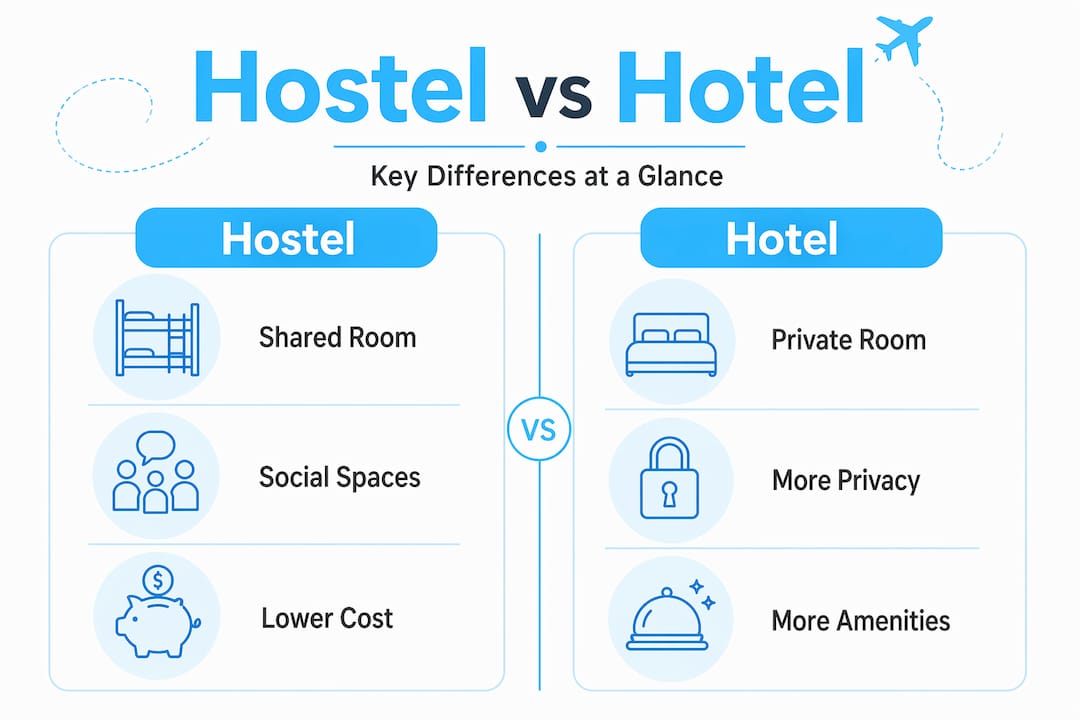
Here’s where it gets interesting. The line between the two has shifted. Many hostels now offer private rooms in hostels alongside dorms, complete with their own locks and sometimes ensuite bathrooms. At the other end, a new wave of premium properties called “poshtels” or lifestyle hostels now include rooftop bars, co-working spaces, and boutique design at prices that rival budget hotels.
| Feature | Hostel | Hotel |
|---|---|---|
| Room type | Dorm bed or private room | Private room only |
| Bathroom | Shared (usually) | Private en-suite |
| Pricing model | Per bed | Per room |
| Daily housekeeping | Rare or limited | Standard |
| Communal spaces | Central feature | Lobby or bar only |
| Social events | Common | Uncommon |
| Kitchen access | Usually yes | Rarely |
It’s also worth knowing that terms like “hotel” and “hostel” carry no strict legal definition in many countries. Always read recent reviews and check the actual facilities list before booking. The name alone won’t tell you what you’re getting.
Breaking down the real costs
Here’s where the hostel advantages become most concrete. Dorm beds cost $15–$50 per night in most global destinations, while private hostel rooms range from $35 to $120. That gap against budget hotels is real, but the nightly rate is only part of the story.
The bigger saving often happens at mealtimes. Cooking your own meals in a hostel’s communal kitchen can save solo travelers around $45 per day compared to eating out, which becomes a daily necessity in most hotels. On a two-week trip, that adds up to over $600 in food savings alone.
Here’s a practical breakdown of typical daily costs for a solo traveler in a mid-tier city:
| Expense | Hostel dorm | Hostel private | Budget hotel |
|---|---|---|---|
| Accommodation | $25 | $70 | $100 |
| Food (meals out or cooked) | $15 | $15–$30 | $40–$60 |
| Estimated daily total | $40 | $85–$100 | $140–$160 |
- Hostels in city centers often cut your transportation costs because they cluster near major attractions and transit
- Budget hotels in the same central locations frequently cost double the hostel rate for a comparable area
- Some hotels include breakfast in the room rate, which reduces the meal cost gap significantly
- A hotel gym, pool, or included spa access can offset the higher room cost if you’d pay for those separately
Pro Tip: Before dismissing a hotel as too expensive, add up what you’d spend on food, gym access, and transport when staying at a hostel in a less central location. The total difference is often smaller than the room rate suggests.
Check Pilottraveldeals.com’s guide on comparing hotel prices to see real-time rate data across major destinations, which makes this kind of total cost math a lot easier to do before you book.
Privacy, comfort, and amenities
This is the section where hotels win clearly on paper, though the reality is more nuanced.

Hotels prioritize privacy and quiet, with soundproofed rooms, ensuite bathrooms, and services like room service and daily linen changes. If you’re traveling with a partner, recovering from a long flight, or working remotely on a deadline, that private space isn’t a luxury. It’s what makes the trip functional.
Hostel dorms are the opposite. You share a room with strangers who operate on different schedules. Someone will come in at 2 a.m. Someone else will set an alarm at 6 a.m. Noise is part of the deal, and if you’re a light sleeper, a dorm can genuinely disrupt your trip.
That said, the hostel amenities picture is richer than most people expect:
- Communal kitchens with full equipment for cooking real meals
- Shared lounges that become genuine social hubs each evening
- Organized events: pub crawls, city walking tours, game nights, cooking classes
- On-site travel advice from staff who know the destination deeply
- Luggage storage, laundry facilities, and bike rentals often included or at low cost
Pro Tip: If you want a hostel’s social atmosphere but can’t sleep in dorms, book a private hostel room. Private hostel rooms are typically 20–30% cheaper than budget hotel rooms and still get you access to the kitchen, lounge, and events.
The wild card is bathroom quality. Hostel shower and toilet setups vary enormously. A well-run hostel with 6 beds per bathroom is a very different experience from one with 20 guests sharing two stalls. Checking cleanliness and the shower-to-guest ratio in recent reviews is the single most useful thing you can do before booking a hostel.
Hotels, by contrast, deliver consistency. The bathroom is yours. The towels are clean. That predictability matters more than people admit until they’ve had a bad shared bathroom experience.
Which accommodation fits your travel style
The hostel vs hotel debate resolves quickly once you match the option to the traveler.
-
Solo travelers under 40 seeking connection. Hostels were built for this. The social environment in hostels creates natural, low-effort opportunities to meet people without the awkwardness of forcing conversation at a hotel bar. Common rooms, organized events, and shared meals do the work for you.
-
Couples and families who value privacy. A hotel is almost always the right call. Two people splitting a hotel room cuts the per-person cost significantly, and you get uninterrupted time together without sharing a bathroom with strangers. For families with kids, shared dorms aren’t a realistic option.
-
Business travelers on company time. Hotels win without debate. Reliable Wi-Fi, a desk, a quiet room, and housekeeping all support a productive work trip. Most hostels, even premium ones, can’t match that level of consistency.
-
Budget backpackers doing multi-stop trips. Dorm beds in well-located hostels make extended travel financially possible. On a 30-day trip, the savings compared to budget hotels can fund an entire extra week of travel.
-
Travelers who want both. This is actually the smartest approach for longer trips. Open your first few nights to a hostel for the social connections and exploration, then switch to a private room or budget hotel when you need rest, recovery, or focus. Many experienced travelers mix accommodation types throughout a single trip rather than committing to one model.
The label matters less than matching the accommodation to what that specific leg of your trip requires.
My take after years of both
I’ve slept in dorms from Lisbon to Bangkok, and I’ve also spent nights in hotels where the silence and the white towels were exactly what I needed. My honest view is that most travelers over-commit to one side of this debate.
The people who swear off hostels often haven’t stayed in a good one. A well-run hostel with a lively common room can change how you experience a city. You get tips from other travelers you’d never find on a travel blog, you end up at local spots nobody reviewed online, and you leave with friendships that hold up past the trip. That’s not available in any hotel at any price.
But I’ve also seen people force the hostel experience when they genuinely needed rest. Arriving after a red-eye flight and trying to sleep in a 10-bed dorm while nursing a headache is not budget travel. It’s just suffering. Hotels aren’t a sellout. They’re the right tool when privacy and sleep are the priority.
What I’ve learned is this: decide what the trip needs, not what your budget ego demands. Sometimes a $90 hotel night is the better investment than a $25 dorm that wrecks your next two days. And sometimes the social value of hostel stays is genuinely worth more than any comfort upgrade a hotel provides.
The best trips I’ve taken mixed both. That’s the framework I’d give anyone planning something longer than a week.
— Asher
Find the best rates on hostels and hotels
When you know what you want, the next step is finding the best price for it. Pilottraveldeals.com lets you compare hotel deals across budgets in one place, so you’re not jumping between booking platforms trying to figure out which rate is actually lowest.

If you’re leaning toward hotels but want to spend less, the smart ways to save on hotels guide on Pilottraveldeals.com covers 8 proven strategies that work across traveler types. And if you’re traveling solo and still working out the full budget picture, the solo travel money-saving tips guide walks through how to reduce costs on accommodation, food, transport, and more. Pilottraveldeals.com also aggregates cheap airfare deals so you can plan the full trip cost in one session rather than three.
FAQ
What is the main difference between a hostel and a hotel?
The core difference is privacy and social structure. Hotels offer private rooms with ensuite bathrooms and structured service; hostels offer shared dorms, communal spaces, and a social environment at a significantly lower cost per night.
Are hostels really cheaper than hotels?
Yes, in most cases. Dorm beds average $15–$50 per night, while budget hotel rooms typically start at $50–$150. The gap widens further when you factor in hostel kitchen access, which reduces daily food costs.
Can you get a private room in a hostel?
Yes. Many hostels offer private rooms that are 20–30% cheaper than budget hotels while still providing access to communal kitchens, lounges, and organized social events.
Who should choose a hostel over a hotel?
Solo travelers under 40 seeking social connection and budget travelers doing longer trips get the most value from hostels. Couples, families, and business travelers typically fare better in hotels.
How do I know if a hostel is clean and well-run?
Read recent reviews specifically mentioning bathrooms, shower ratios, and staff responsiveness. Bathroom quality in hostels varies widely, so don’t rely on star ratings alone. Look for specific comments about cleanliness from guests who stayed within the last few months.

