TL;DR:
- Business travel is purpose-driven, employer-funded, and focused on achieving specific work objectives.
- Leisure travel prioritizes experience, personal choice, and longer planning for overall enjoyment.
Most travelers assume the line between business and leisure travel is obvious. It rarely is. Whether you’re extending a conference trip by a few days to explore the city or booking a “vacation” that doubles as a networking opportunity, the distinction between business vs leisure travel matters more than you think. It affects how you budget, what your employer covers, how you protect your health, and even which booking strategy saves you the most money. Understanding the difference, and the gray area between them, changes how you plan every trip.
Table of Contents
- Key takeaways
- Core differences between business and leisure travel
- The rise of bleisure travel
- Planning and budgeting for business vs leisure
- Travel’s impact on your health and wellbeing
- Managing costs and policies in combined trips
- My take on the business vs leisure divide
- Plan smarter trips with Pilottraveldeals
- FAQ
Key takeaways
| Point | Details |
|---|---|
| Business travel is goal-driven | Corporate trips are typically short, frequent, and funded by employers with defined spending guidelines. |
| Leisure travel prioritizes experience | Personal trips tend to be longer, more price-sensitive, and planned further in advance for maximum enjoyment. |
| Bleisure travel is the new normal | 83% of business travelers now extend work trips with leisure days, blurring traditional travel categories. |
| Cost allocation matters | In blended trips, employers cover standard business costs while travelers pay any personal extension expenses. |
| Health impacts differ by type | Leisure travel builds psychological resilience, while frequent business travel without recovery habits leads to burnout. |
Core differences between business and leisure travel
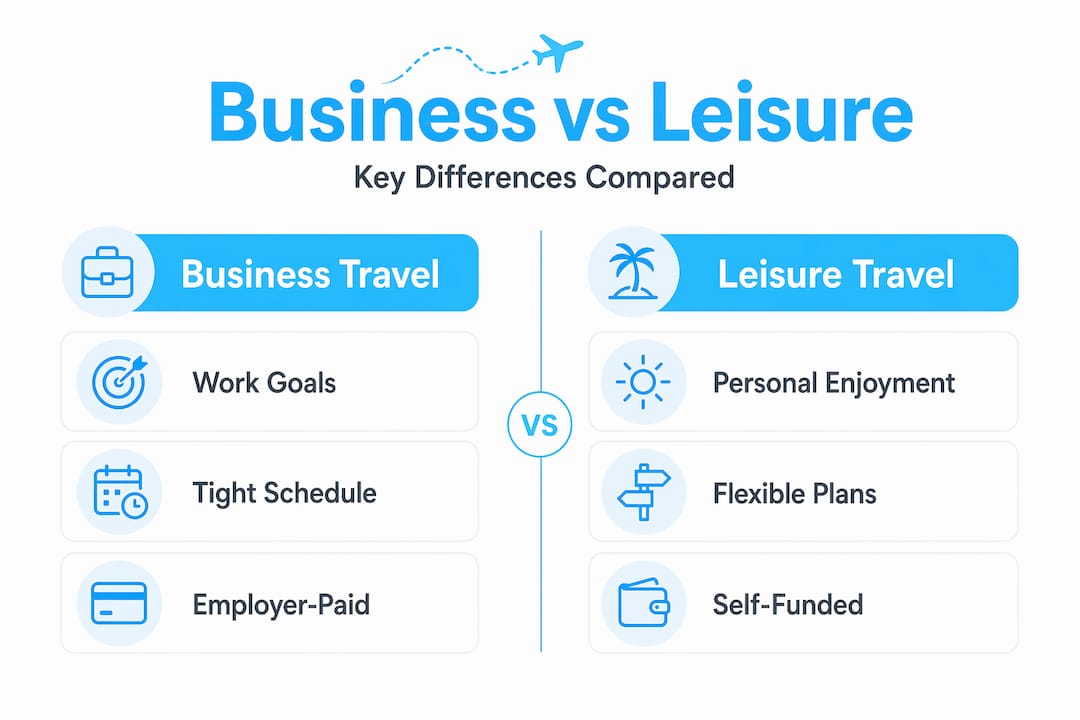
At its foundation, business travel is purpose-built. You go somewhere to accomplish a specific work goal. A sales meeting in Chicago, a product launch in Berlin, a training session in Austin. The trip has a defined start, end, and deliverable. Business travel spending is projected to hit $1.69 trillion globally in 2026, reflecting just how central corporate travel remains to how companies operate.
Leisure travel works on entirely different logic. You go because you want to. The destination, pace, and budget are personal choices. Leisure travelers tend to plan further ahead, stay longer, and prioritize experience over efficiency. They’re also far more price-sensitive. Leisure travel accounts for roughly 84.8% of all travel spending, yet business travelers spend more per trip because someone else is paying.
Here’s a side-by-side look at how these two travel types compare:
| Category | Business travel | Leisure travel |
|---|---|---|
| Primary purpose | Work goals and deliverables | Rest, exploration, personal experience |
| Duration | Short, typically 2-4 days | Longer, often 7+ days |
| Booking lead time | Often last-minute or flexible | Planned weeks or months ahead |
| Who pays | Employer or company budget | Traveler’s personal funds |
| Accommodation preference | Business hotels near offices | Varied, from budget to boutique |
| Flexibility | Low (schedule-driven) | High (experience-driven) |
| Frequent traveler programs | Used for corporate perks | Used for personal savings |
One pattern worth noting: business travelers routinely choose convenience over cost. Direct flights, central hotels, and express check-ins are standard expectations. Leisure travelers make different trade-offs. A longer layover is acceptable if it saves $200. For efficient business trip planning, those trade-offs disappear entirely because lost time has a direct cost to the trip’s purpose.
The rise of bleisure travel
Bleisure travel is exactly what it sounds like. It’s the practice of combining business and leisure within a single trip. You attend your three-day conference, then spend the weekend hiking trails near the conference city before flying home Sunday night. Simple concept. But the implications for planning, expense management, and employer policy are anything but simple.
The numbers make clear this is no longer a niche behavior. 83% of business travelers have taken bleisure trips, and 89% plan to add leisure days to upcoming work travel. This shift is reshaping how both employees and companies think about corporate travel vs vacation time.
Why is bleisure growing so fast? A few reasons:
- Remote and hybrid work have made the boundaries between work time and personal time more fluid
- Travelers already absorb the disruption of travel and want to make it worthwhile
- Many destinations where business happens are genuinely appealing for leisure as well
- Well-managed bleisure programs improve employee morale and reduce burnout with minimal cost to companies
The most practical consideration for bleisure travelers is the expense split. Most corporate policies use what’s called a “cost comparison” approach. The employer covers what the trip would have cost if the employee traveled on standard business dates only. Any difference in flight cost, extra hotel nights, or personal excursions comes out of the employee’s pocket. This keeps things clean and protects both parties.
Pro Tip: Before extending a business trip for personal time, run your own cost comparison first. Pull the price for your original business-only itinerary and compare it to the modified version. If the flight cost is the same or lower (which often happens when you shift to a weekend return), your employer may cover it entirely. Document everything before you book.
Planning and budgeting for business vs leisure
How you plan a trip changes completely depending on its purpose. Business trip planning is largely about minimizing friction. You want the most direct route, the hotel closest to your meetings, and a schedule that protects your focus time. Leisure travel is the opposite. You’re optimizing for experience, discovery, and value.
Here’s a practical framework for approaching each:
- Define the trip type clearly before booking. Even a mixed trip benefits from clarity on which days are work and which are personal. It affects your tax documentation, expense reports, and what receipts you keep.
- Budget separately. Set a business travel budget tied to your company’s policy and a personal budget for any leisure days. Mixing them causes headaches when reimbursement time comes.
- Pack with both purposes in mind. If you’re extending a work trip, bring one versatile personal outfit rather than packing an extra bag. Overpacking is the bleisure traveler’s most common mistake.
- Book accommodation strategically. Business travel often justifies a higher-end hotel for productivity. For leisure extensions, consider switching to a smaller property or a neighborhood spot. Many travelers miss the fact that boutique hotels in 2026 often offer more character and value outside the business district.
- Use timing to your advantage. Domestic leisure trips booked months in advance almost always cost less. Business travel booked last-minute benefits from corporate negotiated rates and flexible fare classes.
Pro Tip: When it comes to loyalty programs, don’t let points accumulation drive bad travel decisions. Choosing convenience over loyalty rewards, like taking a direct flight instead of two connections to earn more miles, often results in less exhaustion and a better overall trip. Points are a bonus, not a travel strategy.
For maximizing what you earn on corporate trips, explore corporate travel discount options that apply to both employer-negotiated rates and personal bookings.
Travel’s impact on your health and wellbeing
The type of travel you do has measurable effects on your mental and physical health. The difference between travel for work vs pleasure is not just psychological. It shows up in biology.
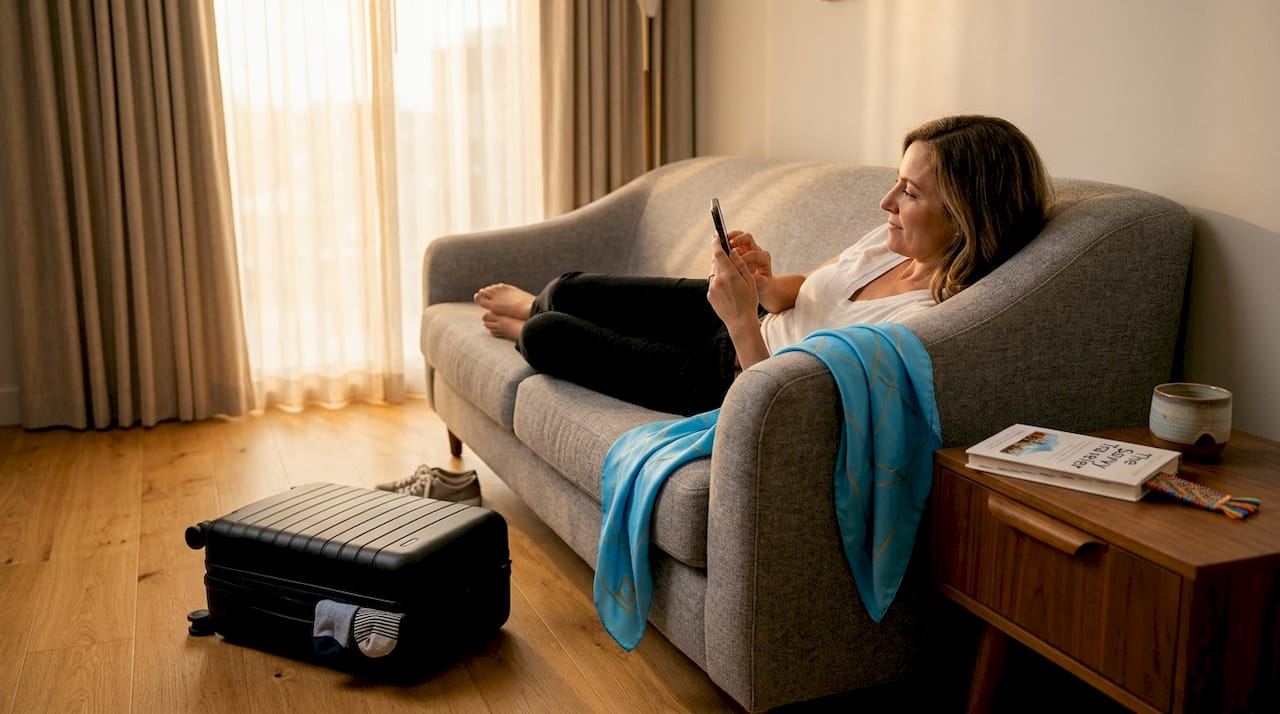
Leisure travel carries documented health benefits. Booking a holiday about four months in advance increases happiness through the anticipatory effect. You don’t have to be at the destination to benefit. The planning, the countdown, the anticipation all contribute to a measurable boost in wellbeing. For anyone considering holiday travel planning as a form of self-care, this research backs it up directly.
The physical dimension matters too. Travel offers novelty and movement that support biological resilience and stress reduction. Walking new cities, adjusting to new environments, and breaking routine patterns all contribute to healthier aging.
“The greatest risk for frequent business travelers isn’t a packed schedule. It’s the silent accumulation of poor sleep, skipped meals, and no recovery time that eventually forces the issue.”
Business travel presents the opposite challenge. The more frequent your trips, the harder it becomes to maintain the habits that protect your health. Protecting sleep as a scheduled appointment during travel is one of the most practical strategies frequent travelers can adopt. Treat your sleep window the same way you treat a client call: non-negotiable, blocked off, no exceptions.
Bleisure travel offers a genuine middle path. Extending a work trip with even two leisure days allows for decompression, exploration, and the kind of mental reset that pure work travel never provides. The combination can reduce travel-related burnout significantly when managed well.
For personalized leisure experiences that double as genuine recovery, a Scottish Highlands itinerary is the kind of destination that shows you what leisure travel is actually capable of when designed with intention.
Managing costs and policies in combined trips
When a trip blends work and personal time, the financial and administrative details get more complex. Most travelers underestimate this until they’re sitting in front of an expense report trying to remember what they spent on what.
Here’s how smart bleisure travelers handle the logistics:
| Management area | Business portion | Personal portion |
|---|---|---|
| Flight cost | Company standard fare | Difference from extended dates |
| Hotel | Nightly rate x business nights | Personal nights at own expense |
| Meals | Per diem or receipts within policy | Personal discretion |
| Ground transport | Business-related trips only | Personal sightseeing costs |
| Travel insurance | Company policy coverage | Personal travel insurance |
The cleaner your records, the faster your reimbursement and the smaller your tax headache. Automation tools now exist that handle cost comparisons, split billing, and itinerary separation automatically. If your company uses a corporate travel management platform, check whether it supports bleisure splitting before you assume you have to do it manually.
From a safety perspective, most employer travel insurance covers employees only during the business portion of a trip. The moment you enter personal leisure days, that coverage typically ends. Purchasing your own short-term travel insurance for leisure extensions is not optional. It’s protection against the exact scenario most bleisure travelers assume won’t happen to them.
My take on the business vs leisure divide
I’ve spent years watching how people navigate the tension between travel for work vs pleasure, and the biggest mistake I see is treating them as fundamentally separate problems. They’re not. They share infrastructure: the same airports, hotels, booking platforms, and loyalty programs.
What actually separates them is mindset and recovery. Business travel wears you down precisely because the environment rewards you for ignoring your own needs. The culture of showing up exhausted as proof of commitment is real, and it’s expensive in the long run. What I’ve found actually works is pre-planning recovery the same way you pre-plan meetings. You decide in advance when you stop checking email, when you sleep, and what you’ll do with any free hours.
Bleisure travel, when done with intention, is genuinely one of the better ideas to come out of the past decade of shifting business travel trends. You’re already somewhere new. You’ve already absorbed the disruption of travel. Spending two extra days actually experiencing the city instead of flying home the morning after the conference closes is not indulgent. It’s rational. The travelers who resist it usually regret it somewhere over the Midwest on a Sunday evening.
My honest advice: build at least one leisure extension into every business trip that lasts more than two days. Even one full free day changes the entire emotional texture of the trip.
— Asher
Plan smarter trips with Pilottraveldeals
Whether you’re booking a solo business sprint or planning an extended bleisure trip across three cities, the difference between a good deal and an overpriced itinerary often comes down to where you search and when you commit.
Pilottraveldeals pulls together flight and hotel comparisons from multiple providers so you can evaluate your full trip in one place. For business travelers watching per-trip budgets, the guide on finding affordable domestic flights covers the timing and booking tactics that consistently cut costs. For leisure trip planning where flexibility gives you more options, the cheap flight search guide walks through how to find routes others miss. And when you’re ready to lock in accommodation for any trip type, the hotel booking guide walks you through securing the best available rate step by step.
FAQ
What is the main difference between business and leisure travel?
Business travel is purpose-driven, employer-funded, and built around achieving work goals. Leisure travel is personally motivated, price-sensitive, and focused on experience and rest.
What does bleisure travel mean?
Bleisure travel combines business and leisure within a single trip, such as attending work meetings and then extending the stay to explore the destination. 83% of business travelers now do this regularly.
Who pays for the personal days in a bleisure trip?
Under most corporate policies, employers cover the standard business trip cost only. The employee pays any additional expense that results from extending the trip for personal leisure days.
Does leisure travel actually benefit your health?
Yes. Research shows that anticipating a holiday boosts happiness even before travel begins, and the novelty and movement of travel support stress reduction and biological resilience over time.
How can frequent business travelers avoid burnout?
Protecting sleep as a fixed, non-negotiable block during travel is one of the most effective strategies. Treating rest as a scheduled commitment rather than a leftover activity significantly reduces cumulative travel fatigue.
Recommended
- Business travel trends to optimize efficiency and costs – PilotTravelDeals.com
- 7 Best Practices for Efficient Business Trip Planning – PilotTravelDeals.com
- 7 Smart Ways to Maximize Business Travel Benefits – PilotTravelDeals.com
- How to plan affordable business trips and maximize savings – PilotTravelDeals.com