
TL;DR:
- Understanding airline fare components and real-time algorithms helps travelers buy smarter.
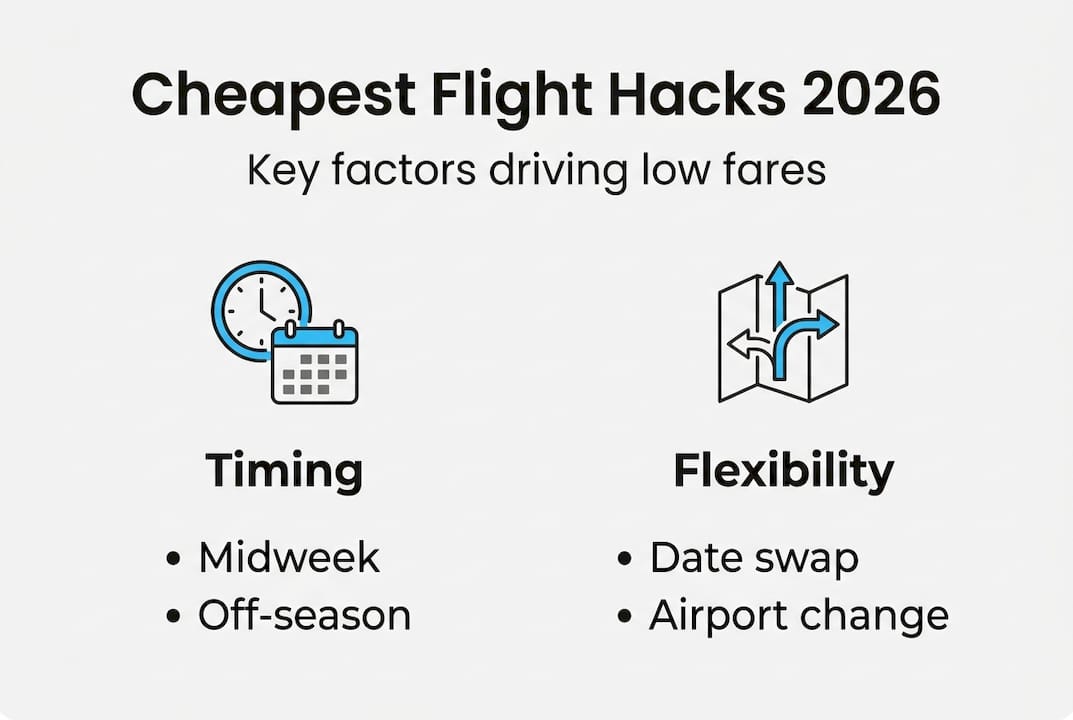
- Timing midweek, off-peak seasons, and 1-3 months in advance can significantly reduce flight costs.
- Flexibility with travel dates, airports, and monitoring alerts boosts chances of finding the cheapest boletos de avion.
How to find the cheapest boletos de avion in 2026
Most travelers assume cheap flights are a matter of luck, a random alignment of timing, credit card points, and airline whims. That belief costs real money. The truth is that airfare pricing follows patterns, and once you understand those patterns, you can stop guessing and start buying smarter. This guide walks you through exactly how airline ticket prices are set, when they drop, and what proven strategies consistently put you in front of the lowest fares available. Whether you fly once a year or every other month, these are the tactics that actually work in 2026.
Table of Contents
- Understanding airfare pricing: What actually drives ticket costs?
- Timing your purchase: When are boletos de avion actually cheapest?
- Flexibility is your superpower: Dates, airports, and routes
- Smart booking: Tools and tactics savvy travelers swear by
- The overlooked truth: Why flexibility and vigilance consistently beat ‘travel hacks’
- Stretch your travel budget even further with these resources
- Frequently asked questions
Key Takeaways
| Point | Details |
|---|---|
| Timing matters most | Flying midweek and during off-peak seasons can save you up to 25 percent compared to peak times. |
| Flexibility unlocks deals | Adjusting dates, airports, or accepting layovers makes it much easier to find the cheapest boletos de avion. |
| Consider total costs | Always include all fees and extras in your comparison to ensure your deal is truly the lowest. |
| Be vigilant with search | Set price alerts, use incognito mode, and compare fares on multiple platforms for the best results. |
Understanding airfare pricing: What actually drives ticket costs?
Before you can beat the system, you need to understand it. Airline ticket prices are not pulled from thin air. Every fare you see is the result of several stacked cost layers that airlines calculate in real time.
The base fare is just the starting point. On top of that come government taxes, airport fees, fuel surcharges, and carrier-imposed fees. In some markets, taxes alone can double the visible base price. For travelers booking flights in Latin America, this is especially relevant right now. Fuel costs rose to $220 per barrel in 2026 due to ongoing Middle East tensions, up from $90 per barrel just months earlier, pushing regional ticket prices sharply higher.
“Travelers will begin to notice a significant rise in airfares. The increase in fuel costs, combined with high airport taxes, is putting real pressure on ticket prices across Latin America.”
Supply and demand play an equally big role. Airlines use what is called yield management, a system where prices adjust constantly based on how many seats are left on a flight, how far out the departure date is, and what competitors are charging. A seat that costs $180 on Monday might be $240 by Thursday if enough people book it in between.
Here is a simplified breakdown of what makes up a typical airfare:
| Cost component | Typical share of total ticket price |
|---|---|
| Base fare | 40 to 55% |
| Government taxes | 15 to 25% |
| Airport and security fees | 10 to 15% |
| Fuel surcharge | 10 to 20% |
| Carrier-imposed fees | 5 to 10% |
Global events compound these variables. Fuel spikes, currency shifts, natural disasters near key hubs, and even major sporting events can all jolt fares overnight. In 2026, this is not theoretical. The fuel crisis has made it harder to predict pricing windows, which makes knowing how to compare flight ticket prices across multiple platforms more important than ever.
One more factor worth naming: algorithmic pricing. Airlines and online travel agencies update fares hundreds of times per day using automated systems. These algorithms account for search volume on specific routes, competitor pricing, and real-time seat inventory. That is why prices can literally change between the moment you first search and the moment you click “buy.” Understanding this dynamic is not just interesting trivia. It is the foundation for every tactic in the rest of this guide.
Timing your purchase: When are boletos de avion actually cheapest?
Now that you know why ticket prices shift, let’s pinpoint when the best deals appear and how to avoid the priciest days.

The single most actionable timing insight is this: not all days are created equal, and that applies both to when you fly and when you buy. Research consistently shows that midweek flights on Tuesdays, Wednesdays, and Saturdays offer savings of up to 20 to 25% compared to Friday and Sunday departures, when business travelers and weekend warriors flood the booking systems.
Season matters just as much as day of week. Off-peak travel windows, broadly January through May and September through early December, tend to produce the lowest fares because demand is lower. Airlines are filling seats rather than maximizing price per seat. That is a dynamic you can exploit.
| Season | Demand level | Average price relative to peak |
|---|---|---|
| January to May | Low to moderate | 15 to 30% below peak |
| June to August | High | Peak pricing |
| September to early December | Low to moderate | 10 to 25% below peak |
| Mid-December to New Year | Very high | 20 to 40% above average |
As for when to buy, the sweet spot for domestic flights is generally 1 to 3 months before departure. For international routes, aim for 2 to 6 months out. Waiting until the last week rarely produces savings unless you are on a very flexible itinerary and willing to take whatever is left.
Price alerts are one of the most underused tools available to budget travelers. Enabling price alerts and tracking fare trends on platforms like Google Flights or Hopper lets you see when a route drops below its typical range, which is far more reliable than trying to guess the perfect moment.
Here is a simple process to follow:
- Search your target route and note the average price range shown in the fare calendar.
- Set a price alert for that route with your preferred departure window.
- Monitor weekly, not daily. Daily checking creates anxiety without adding data.
- When the alert triggers a price below your target, cross-check on one other platform before buying.
- Book within 24 hours of spotting the deal. Good fares disappear fast.
Pro Tip: Use flexible travel dates features on Google Flights or Skyscanner to view a full month of prices on a color-coded calendar. You can visually spot the cheapest travel window in under two minutes without manually searching each date. This single habit can save you hours and hundreds of dollars per trip.
Understanding why flexible dates matter goes deeper than just shifting a departure by a day. A Thursday departure instead of a Friday one on a popular route can shave $60 to $120 off a round trip without changing your destination or total travel time.
Flexibility is your superpower: Dates, airports, and routes
Beyond timing, your willingness to be flexible can multiply your chances of scoring truly cheap boletos de avion.
Flexibility is not just a nice travel personality trait. It is a financial strategy. Research shows that direct flights cost about 20% more on average than connecting itineraries, and simply being open to a layover can unlock fares that never appear in quick, simple search filters. Shifting your dates by plus or minus three days has a similar effect.
Alternate airports are another overlooked lever. If you live near two airports or if your destination city has a secondary airport, always compare both. Flying into a smaller regional hub and taking a short bus or train ride to your final destination can save significantly more than the ground transportation cost. Cities like New York (JFK vs. Newark vs. LaGuardia), London (Heathrow vs. Gatwick vs. Stansted), and Mexico City (AICM vs. AIFA) all have multi-airport dynamics that can work in your favor.
Here is a focused list of flexibility techniques that consistently deliver savings:
- Shift dates by 2 to 3 days in either direction and compare fares on each date.
- Try both nearby airports at your origin and destination and factor in transfer cost.
- Accept one layover on routes where nonstop is the only premium option.
- Book connecting flights separately when the combined price of two one-way tickets on different carriers beats the through-ticket price.
- Look at nearby cities as alternative destinations if your goal is a region, not a specific spot.
- Consider open-jaw bookings, where you fly into one city and depart from another, which often reduces backtracking costs.
Pro Tip: Multi-city bookings available through the flexible dates savings guide on our platform let you construct complex itineraries that can be cheaper than a standard round trip. If you plan to visit two or more cities, price out a multi-city ticket rather than separate round trips from your home base. You may be surprised at the difference.
The key mental shift is to stop treating your travel parameters as fixed. Every time you loosen a constraint, you open more inventory to compete for your purchase. Airlines want empty seats filled. When you maximize travel flexibility, you put more of those seats within your reach.
Smart booking: Tools and tactics savvy travelers swear by
Even small tweaks to your search and booking approach can help you sidestep common traps and discover hidden deals.
Here is something most travelers do not realize: airlines and some booking platforms track your search history. If you search the same route repeatedly, the price can appear to climb, nudging you toward a faster purchase. This is not a conspiracy theory. Clearing your cookies and using incognito mode is a simple defense that costs nothing and takes five seconds.
“The cheapest-looking fare is not always the cheapest flight. Always check total costs, including baggage, seat selection, and onboard extras, before celebrating a deal.”
Low-cost carriers are especially good at advertising a low base fare while charging separately for everything else. A $39 ticket that costs $90 after a checked bag and seat assignment is not a deal compared to a $75 ticket on a full-service airline that includes both. Always compare total trip cost, not just the headline price.
Here is a numbered checklist for a smart search-and-buy process:
- Open an incognito or private browsing window before every flight search.
- Search on at least two comparison engines (Google Flights plus one other) to cross-reference prices.
- Before selecting a low-cost carrier fare, add the cost of your typical baggage and seat needs to the base price.
- Check the airline’s own website after finding a fare on a comparison site, as direct booking sometimes reveals lower prices or avoids third-party fees.
- Screenshot or bookmark the fare before navigating away. Price changes during the same session do happen.
- Set alerts on two platforms simultaneously so you catch drops from different data sources.
Pro Tip: Some of the best practical cheap plane ticket tips involve understanding exactly how low-cost carrier fees are structured. Reading about understanding low-cost airlines and their revenue models helps you decode which add-ons are truly optional and which are unavoidable, so you can budget accurately before buying.
Another tactic worth building into your routine is using fare comparison engines that show price trends over time. Google Flights, for example, shows a graph of how prices have moved for a given route over the past several months. If the current fare is near the bottom of that range, it is worth buying soon. If it is near the top, waiting may be wise.
Fare class is also something to learn. Airlines sell seats in multiple classes even within economy, from basic economy with no changes allowed to standard economy with more flexibility. Knowing which restrictions matter to you helps you avoid paying for flexibility you do not need or getting locked into a non-refundable ticket for a trip that might shift.
The overlooked truth: Why flexibility and vigilance consistently beat ‘travel hacks’
The travel internet is full of articles promising one weird trick that unlocks secret fares. Incognito mode alone will not save you hundreds. Booking on a specific day at a specific hour is not a guaranteed formula. These tips circulate because they are shareable, not because they are reliable.
What actually works, consistently and across every market we have tracked, is the combination of genuine flexibility and ongoing monitoring. Travelers who set multiple alerts, check alternate airports without being asked to, and stay willing to shift dates by a few days are the ones who show up in our data with the lowest average fares paid. It is not glamorous advice. But flexible booking for modern travelers is the one strategy that does not get patched by airline algorithms because it is not a loophole. It is just smart behavior.
Patience is also underrated. Most cheap fares are not found in a single search session. They appear over days or weeks of monitoring. Travelers who book the first fare they see pay a premium for that convenience. Travelers who set an alert and wait two weeks often find something meaningfully cheaper. The data supports it. The habit is worth building.
Stretch your travel budget even further with these resources
Ready to maximize your savings from booking to accommodations? Here’s where to keep the deals rolling.
Finding a cheap flight is step one. Getting the rest of your trip locked in at a great price is where the real savings stack up. At PilotTravelDeals.com, we aggregate deals across flights, hotels, SIM cards, and more so you are not jumping between a dozen tabs to plan one trip.

If you are just getting started, our guide on how to find affordable domestic flights walks through market-specific strategies for short-haul routes where timing and carrier choice make a dramatic difference. For a step-by-step walkthrough of the full purchase process, our booking cheap flights guide covers every stage from search to confirmation. And once your flights are locked in, browse our hotel deals to complete your trip at up to 80% off standard rates.
Frequently asked questions
Which days are usually cheapest to fly?
Tuesdays, Wednesdays, and Saturdays consistently offer the lowest flight prices, while Fridays and Sundays tend to be the most expensive days to depart.
How do I know if a fare will drop or rise soon?
Set up price alerts and review historical price trends for your route to identify whether the current fare is above or below the typical range before committing.
Why are airline tickets so expensive in 2026?
Airfares in 2026 rose sharply because fuel costs spiked to $220 per barrel amid global energy disruptions, with high airport taxes in many markets amplifying the impact on ticket prices.
Is it cheaper to book round trips or one-way flights?
Round trips are often cheaper overall, but always price out both options since some routes offer competitive one-way fares, especially on low-cost carriers with flexible fare structures.
What are the most common extra fees with cheap tickets?
Low-cost airlines typically charge separately for checked bags, carry-on luggage above a certain size, seat selection, and onboard food, so compare total costs including baggage before assuming the advertised fare is the final price.
