Feeling uncertain about safety while planning a solo trip abroad is common, especially when exploring unfamiliar places on a tight budget. Solo travelers must cut through popular travel myths and focus on a practical, intelligent approach to protect themselves physically, emotionally, and digitally. This guide reveals travel safety as a dynamic, multi-layered concept, clarifies misconceptions, and shares actionable tips for balancing awareness and enjoyment so you can confidently travel alone without sacrificing security or fun.
Table of Contents
- Defining Travel Safety and Common Myths
- Types of Travel Safety for Solo Travelers
- Digital Security and Identity Protection
- Local Laws and Cultural Awareness Abroad
- Risks to Avoid and Smart Precautions
Key Takeaways
| Point | Details |
|---|---|
| Comprehensive Travel Safety | Travel safety involves a multifaceted approach that addresses physical, emotional, and financial protection. Prepare strategically and maintain situational awareness to mitigate risks. |
| Myths of Travel Safety | Misconceptions can mislead travelers; understand that risks exist beyond high-crime areas and that insurance does not cover all issues. Awareness and preparation are essential. |
| Solo Travel Strategies | Solo travelers must prioritize multiple safety dimensions, including physical, digital, and financial safety. A proactive, multi-layered approach enhances security during travels. |
| Cultural Awareness | Understanding local laws and customs is vital for responsible travel. Researching cultural norms helps avoid misunderstandings and legal complications while abroad. |
Defining Travel Safety and Common Myths
Travel safety goes far beyond simply avoiding dangerous neighborhoods or keeping your wallet secure. It represents a comprehensive approach to protecting yourself physically, emotionally, and financially while exploring new destinations. Global tourism safety frameworks demonstrate that safety involves understanding potential risks, preparing strategically, and maintaining situational awareness.
There are several prevalent myths about travel safety that can mislead even experienced travelers. Some common misconceptions include:
- Believing only high-crime areas are risky for travelers
- Assuming travel insurance automatically protects against all potential problems
- Thinking that being cautious eliminates all potential safety threats
- Expecting local authorities will always help tourists immediately
Travel safety is actually a nuanced concept that combines objective conditions and subjective perceptions. It’s not just about avoiding physical harm, but also protecting your personal information, health, and overall well-being during your journey. Academic research on traveler security emphasizes that safety is a dynamic state requiring continuous assessment and adaptation.
Understanding these complexities means recognizing that travel safety isn’t about paranoia, but about intelligent preparation. Travelers must balance awareness with enjoyment, understanding potential risks without letting fear overshadow their experiences.
Pro tip: Always research your destination’s specific safety landscape before departing, including local emergency contact information, potential health risks, and cultural safety norms.
Types of Travel Safety for Solo Travelers
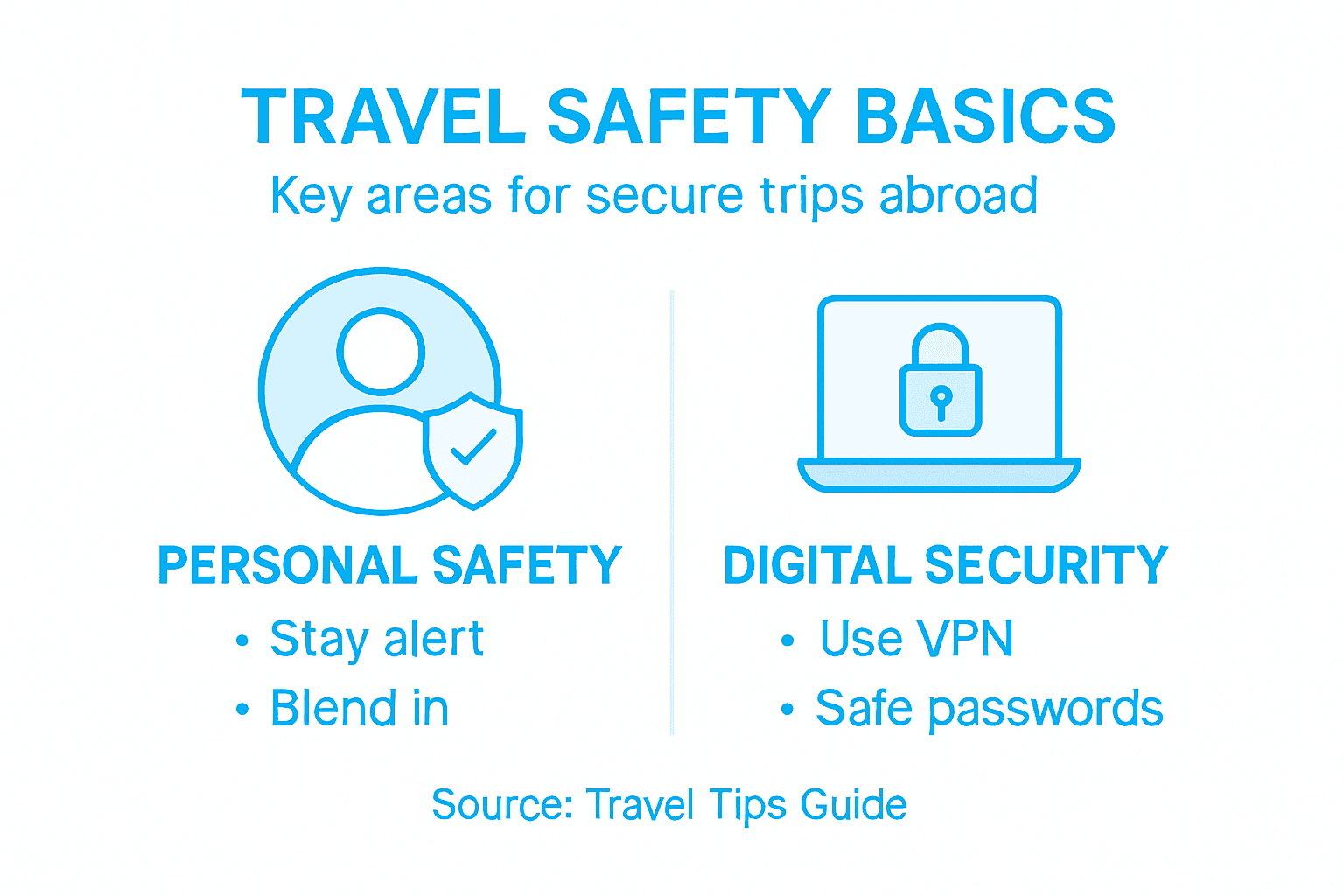
Solo travel demands a comprehensive approach to personal safety that goes beyond traditional travel precautions. Solo traveler safety strategies encompass multiple dimensions, including physical protection, digital security, and situational awareness. Each type of safety requires unique preparation and mindset to ensure a secure and enjoyable journey.
The primary types of travel safety for solo travelers include:
- Physical Safety: Protecting your body and immediate environment
- Digital Safety: Securing personal information and technological devices
- Accommodation Safety: Selecting and maintaining security in lodging
- Transportation Safety: Navigating transit systems securely
- Financial Safety: Protecting monetary resources and preventing fraud
Personal security extends far beyond simple precautions. Comprehensive solo travel safety tips reveal that successful protection involves proactive planning, continuous awareness, and strategic decision-making. Solo travelers must develop a multi-layered approach that anticipates potential risks while remaining flexible and adaptable.
Each safety type requires specific strategies. Physical safety might involve understanding local cultural norms, avoiding high-risk areas, and maintaining situational awareness. Digital safety demands protecting personal data, using secure internet connections, and monitoring online interactions. Transportation safety includes researching reliable transit options, avoiding isolated routes, and staying alert in unfamiliar environments.

Pro tip: Create a comprehensive digital and physical safety plan before departure, including emergency contacts, backup identification copies, and location-specific safety protocols.
Here’s a summary of key travel safety types for solo travelers and why each matters:
| Safety Type | Critical Focus | Importance for Solo Travelers |
|---|---|---|
| Physical Safety | Personal and environmental security | Minimizes risk of harm or injury |
| Digital Safety | Data and device protection | Prevents identity theft and cyber threats |
| Accommodation Safety | Secure lodging selection | Ensures safe rest and storage |
| Transportation Safety | Safe transit navigation | Reduces risk during movement |
| Financial Safety | Guarding money and assets | Avoids fraud and financial loss |
Digital Security and Identity Protection
In an increasingly connected world, digital security has become a critical component of travel safety. Digital travel credentials represent a cutting-edge approach to protecting travelers’ identities and personal information across global destinations. These advanced systems use encryption and biometric data to create secure digital representations of traditional identification documents.
Travelers face multiple digital security risks that require proactive management:
- Public Wi-Fi network vulnerabilities
- Potential device theft or compromise
- Phishing attempts targeting travelers
- Social media location sharing risks
- Financial transaction interception
- Unsecured cloud storage exposures
Cybersecurity for travelers involves a comprehensive strategy of prevention and protection. Virtual security guidelines highlight the importance of implementing multiple layers of digital defense. This includes using virtual private networks (VPNs), enabling two-factor authentication, and maintaining strict privacy settings across all digital platforms.
Technology offers innovative solutions to digital identity protection. Travelers can leverage biometric authentication, encrypted communication channels, and blockchain-based security protocols to minimize risks. This might involve using secure messaging apps, creating temporary travel email accounts, and using dedicated travel devices with limited personal information.
Pro tip: Create a dedicated travel email account and use a separate smartphone or tablet with minimal personal data for international trips to reduce potential digital security risks.
Compare common digital security tools for travelers and their benefits:
| Tool | How It Works | Benefit to Travelers |
|---|---|---|
| VPN | Encrypts internet traffic | Protects data on public Wi-Fi |
| Two-Factor Authentication | Adds login verification step | Secures accounts from unauthorized access |
| Biometric Authentication | Uses fingerprints or facial recognition | Limits device access to owner |
| Encrypted Messaging | Secures conversations | Prevents interception of sensitive info |
Local Laws and Cultural Awareness Abroad
Successful international travel requires more than just a passport and plane ticket. Local laws and cultural norms represent critical components of responsible global exploration. Understanding these nuanced legal and social frameworks can mean the difference between a smooth journey and potential legal complications or cultural misunderstandings.
Key areas of cultural and legal awareness include:
- Dress codes and acceptable public attire
- Photography restrictions in certain locations
- Gestures and body language interpretations
- Religious and spiritual site etiquette
- Public behavior and social interaction norms
- Local communication and respect protocols
- Legal differences in personal conduct
Cultural intelligence goes beyond surface-level understanding. International cultural exchange principles emphasize the importance of respect, adaptability, and genuine curiosity about local customs. Travelers must approach new environments with humility, recognizing that their home country’s legal and social standards do not universally apply.
Research becomes a critical preparation tool for navigating international environments. This involves consulting official government travel advisories, speaking with locals or expatriates, and understanding the historical and social contexts that shape local laws and customs. Some cultures have strict regulations around topics like public displays of affection, alcohol consumption, dress, and social interactions that might seem surprising or counterintuitive to travelers.
Pro tip: Create a digital or physical cultural reference guide for your destination, including key phrases, cultural taboos, and basic legal dos and don’ts before your trip.
Risks to Avoid and Smart Precautions
Navigating international travel successfully requires a proactive approach to personal safety. Global travel advisories highlight numerous potential risks that travelers must anticipate and mitigate before and during their journeys. Understanding these risks is the first step toward creating a comprehensive safety strategy.
Key risks travelers should be aware of include:
- Crime in tourist-heavy areas
- Potential health hazards and infectious diseases
- Political instability and civil unrest
- Transportation accidents
- Natural disaster vulnerabilities
- Food and water contamination
- Scams targeting international visitors
Risk management involves more than simple avoidance. International traveler safety guidelines emphasize the importance of preparation, situational awareness, and adaptable response strategies. Travelers must develop a multifaceted approach that combines preventative planning with real-time decision-making skills.
Effective risk mitigation requires thorough research and preparation. This means understanding local emergency protocols, securing appropriate travel insurance, maintaining multiple communication channels, and developing contingency plans for potential scenarios. Travelers should also remain flexible, avoiding rigid expectations and being prepared to adjust plans quickly if unexpected challenges arise.
Pro tip: Create a digital emergency kit with scanned copies of important documents, emergency contact information, and local embassy details stored securely in multiple locations.
Secure Every Step of Your Journey with Expert Travel Planning
Travel safety means more than just avoiding risk. This article highlights crucial challenges like protecting your physical well-being, safeguarding digital identity, and understanding local laws. These pain points all point to one clear goal: traveling confidently and securely no matter where you go. With concepts like digital security, cultural awareness, and risk management fresh in mind, it is clear that thorough preparation is your best defense.
Planning a trip while prioritizing your personal safety and peace of mind can feel overwhelming. That is why Travel Tips – PilotTravelDeals.com offers you practical guidance alongside unbeatable travel deals.

Take control of your travel safety today by exploring affordable flight and hotel options that fit your plan. Use our user-friendly platform to compare hundreds of offers and book efficiently with confidence. Your next adventure starts with both smart safety choices and smart savings at PilotTravelDeals.com. For more insights that prepare you for a secure and enjoyable trip, visit our Miscellaneous – PilotTravelDeals.com category and discover tips that help you stay safe everywhere.
Get started on your safe journey now and travel smarter with PilotTravelDeals.
Frequently Asked Questions
What are the main aspects of travel safety I should consider?
Travel safety encompasses physical safety, digital security, accommodation safety, transportation safety, and financial safety. Each aspect requires different strategies for protection and risk mitigation.
How can I protect my digital information while traveling?
To enhance digital safety, use a Virtual Private Network (VPN), enable two-factor authentication for your accounts, and avoid using public Wi-Fi for sensitive transactions. Additionally, consider using encrypted messaging apps and temporary travel email accounts.
What types of risks should travelers be aware of?
Travelers should be aware of risks such as crime in tourist areas, health hazards, political instability, transportation accidents, and natural disasters. Preparation and situational awareness are crucial in mitigating these risks.
How can I familiarize myself with local laws and cultural norms before traveling?
Research local laws and customs by consulting official travel advisories, reading about the destination’s culture, and speaking with locals or expatriates. Creating a cultural reference guide can help you remember important dos and don’ts during your trip.
Recommended
- Business Travel Safety Tips: Protecting Your Journey – PilotTravelDeals.com
- Understanding International Travel Tips for Savvy Explorers – PilotTravelDeals.com
- The Joys (and Sorrows) of Travelling Alone – PilotTravelDeals.com
- How Secure Best Travel Deals: Essential Guide – PilotTravelDeals.com
- Essential Financial Advice for Expats: Smart Financial Planning for Expats